


Greetings!
Welcome to the Physiology Friday newsletter.
This week, I wanted to share some of my favorite studies from the endurance sports world that I’ve been excited about. All of these summaries were published in my other newsletter, ‘Run Long, Run Healthy’, where I explore the science of running (mostly) and summarize the latest research in the world of endurance.
I promise you’ll find these studies useful whether you’re a runner or not! Here’s what you’ll learn:
Whether supershoes improve performance but increase injury risk
Why women may have more “physiological resilience” than men
If post-interval-training ice baths blunt performance gains
How to periodize training for aerobic fitness, economy, and strength
Why “effort” may be more insightful than complex training load measures
Details about the sponsors of this newsletter and deals on products I love, including Ketone-IQ, Create creatine, Equip Foods, and ProBio Nutrition can be found at the end of the post.
Do Super Shoes Make You Faster While Increasing Injury Risk?
Super shoes have become one of the strangest training decisions in running. On the one hand, they are clearly fast. The combination of highly resilient foam, tall midsoles, and stiff embedded plates can improve running economy and make race pace feel just a little more forgiving. On the other hand, almost every runner now has a story: the friend who started doing workouts in plated shoes and suddenly had calf issues, foot pain, or a bone stress injury that seemed to come out of nowhere.
That does not mean super shoes are dangerous. But it does raise the question of when these shoes do change how we run, where does that stress go?
A new study looked at exactly that question in elite distance runners. The researchers had 23 healthy elite runners, 11 women and 12 men, run in three different shoe conditions: a neutral shoe, a lightweight responsive foam shoe, and an advanced footwear technology shoe with highly cushioned foam and a stiff embedded plate. The runners tested each shoe in randomized order at three self-selected speeds: training effort, tempo effort, and 5K race pace. During each condition, the researchers measured movement and force patterns that have previously been associated with bone stress injuries.
In the advanced footwear condition, runners showed a lower cadence, meaning they took fewer steps per minute. Lower cadence often goes along with longer strides or slight overstriding, which can increase loading demands on the body over time. The researchers also found more inward collapse of the arch/rearfoot compared with the neutral shoe, another mechanical pattern that has been linked with bone stress injury risk. These changes were described as small, but small changes repeated thousands of times per run can matter when an athlete is stacking workouts, long runs, and high weekly mileage.
But there was also a potentially protective signal. In the super shoes, runners pushed off less with their ankles. That suggests the shoe may reduce demand on the ankle plantarflexors, including the calf-Achilles complex, during propulsion.
This is the part that makes the interpretation more complicated. Super shoes may not simply increase or decrease injury risk; they may redistribute load. Less ankle demand could be helpful for some runners, while altered cadence and greater rearfoot motion could shift stress elsewhere, including toward the bones of the foot or lower leg.
What this means
If you race in plated shoes, you probably need some exposure to them in training so race day does not become a brand-new mechanical stimulus. But I would be cautious about making them your everyday trainer, especially during high-volume blocks or when returning from injury.
Rotate shoes, introduce plated models gradually, and pay attention to early warning signs in the foot, shin, calf, and Achilles. The key idea is that super shoes may help you run faster by changing how load is distributed, but your bones, tendons, and muscles still need time to adapt to that new loading pattern.
Female Runners are More Durable than Males
Most runners think about fitness in terms of what they can do when they’re fresh. What’s your VO2 max? What’s your threshold pace? What can you run for a 5K, half-marathon, or uphill time trial when the legs are ready to go?
But racing rarely asks that question. Racing asks a much more interesting one—what can you still do after two or three hours of accumulated fatigue?
That’s the idea behind “durability” (a.k.a “physiological resilience”), one of the more useful concepts in endurance performance right now. It’s not just how strong your engine is at the start. It’s how much of that engine you can keep using after glycogen drops, muscles get beat up, stride mechanics shift, and perceived effort starts climbing. A new study asked whether male and female runners differ in that quality.
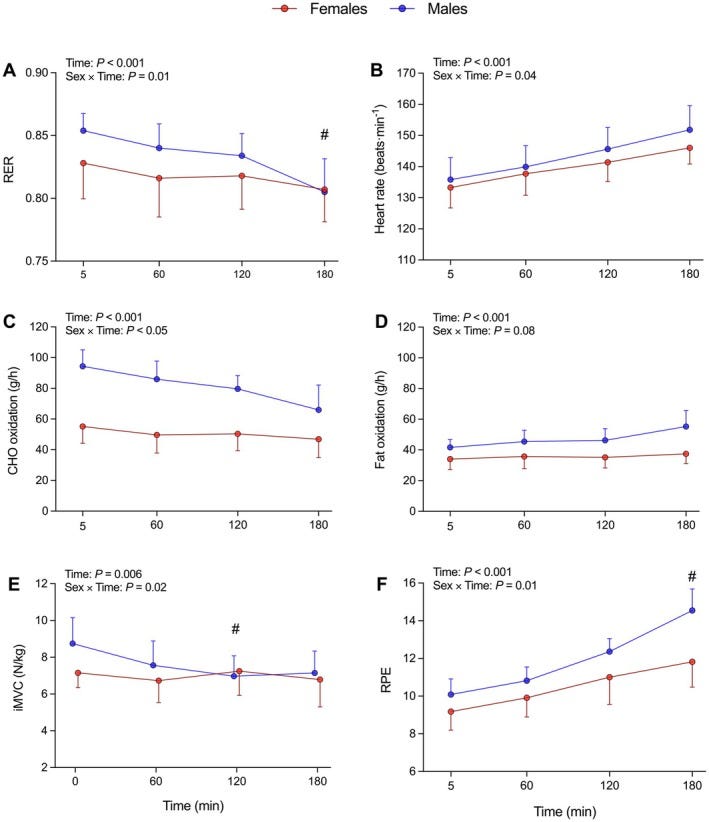
Researchers studied 11 highly trained female trail runners and 11 highly trained male trail runners who were matched by performance level using International Trail Running Association rankings. The runners completed three lab visits: a graded exercise test, a fresh 12-minute uphill time trial, and then a 3-hour treadmill run at moderate intensity with another 12-minute uphill time trial inserted every 60 minutes. During the prolonged run, the athletes consumed 90 grams of carbohydrate per hour and drank water as desired, while the researchers measured physiology, biomechanics, perceived exertion, and the strength of muscles in the thigh and surrounding the knee.
The women held up better. After three hours, female runners had only a 1.1% decline in uphill time-trial speed, while male runners slowed by 9.9%. That is a massive difference in durability. This was not because the women were working less hard in the time trials; heart rate, perceived effort, and peak oxygen uptake during the time trials were broadly similar in how they responded across the protocol. Instead, the difference seemed to come from greater metabolic and neuromuscular resilience.
During the 3-hour steady-state run, both groups shifted toward greater fat use over time, but the shift was much larger in men. By three hours, carbohydrate oxidation had dropped by 29% in male runners versus only 9% in female runners. Respiratory exchange ratio also fell more in men, suggesting a bigger move away from carbohydrate metabolism. During the repeated uphill time trials, the same pattern showed up again: men had larger drops in carbohydrate oxidation, larger increases in fat oxidation, and bigger reductions in peak blood lactate.
That lactate finding is important. In a hard uphill effort, peak lactate is partly a sign that the runner can still access high-intensity carbohydrate-driven energy production. By the final time trial, male runners showed a 53% drop in peak lactate, compared with a 27% drop in females. That suggests the men were losing some ability to hit the same high-intensity metabolic gear as fatigue accumulated.
Muscle strength also declined more in men, with males showing an 18% reduction after two hours, while females were essentially unchanged at that time point. Meanwhile, running economy worsened similarly between sexes, and both groups made fatigue-related biomechanical adjustments: longer ground contact time, reduced stride length, and lower leg stiffness. In other words, the durability advantage in women did not seem to come from some radically different stride pattern. It looked more like better preservation of the metabolic and muscular systems that support performance late in a long effort.
There is one big caveat: the study matched runners by duration, not distance. Because the men ran faster, they covered more total distance during the protocol: about 26 miles versus 22 miles for women. They also expended more energy relative to body mass. The researchers tried to account for this statistically, and the findings largely held up, but this still matters. If the study had matched distance instead of time, the gap might have been smaller.
What this means
The practical takeaway is that durability deserves more attention than fresh fitness.
A runner with a great threshold test or fast standalone workout may not be the runner who performs best after two or three hours, especially on hilly terrain. For everyone, one of the best ways to assess durability may be to place short, controlled hard efforts late in long runs and see how much performance, form, and perceived effort deteriorate. The race is not decided by what your physiology looks like when you’re fresh; it’s decided by what’s still available when the easy miles are behind you.
Does a Post-Run Cold Plunge Block Training Benefits?
Ice baths have one of the best reputations in endurance sports and one of the messiest evidence bases. They feel like recovery. They look like recovery. But there’s always been a bigger question of whether they’re actually helping adaptation, or just making you feel like you’re recovering better?
To answer this question, a new study looked at what is happening inside the muscle after five weeks of interval training plus regular cold-water immersion.
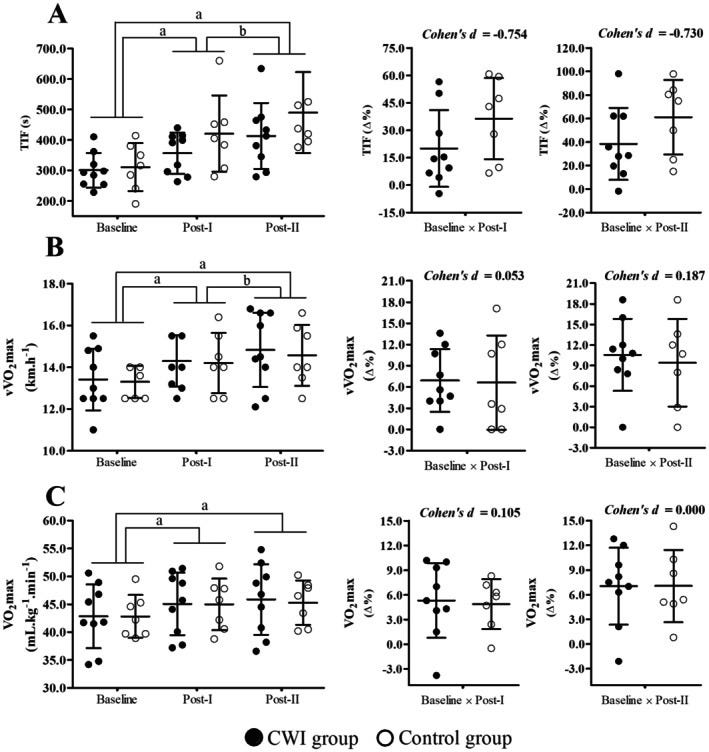
The researchers recruited 16 healthy young men and split them into two groups. Both groups completed the same five-week high-intensity interval training (HIIT) program on a treadmill: three sessions per week of 2-minute intervals at 95% of the runner’s speed at VO2 max, progressing from 5 to 8 reps before tapering down at the end. One group did 11 minutes of cold-water immersion at about 52℉/11°C immediately after each session, while the control group just sat passively at room temperature. Before training, after week 4, and again after week 5, the researchers measured VO2 max, maximal aerobic speed, and time to exhaustion in a run at a constant speed. They also took samples of the runners’ muscles to look at satellite cells, markers of mitochondrial growth, and inflammatory markers.
The main finding was that the ice baths did not meaningfully change anything that mattered. Both groups improved over time, and they improved to a similar extent.
VO2 max went up.
Speed at VO2 max went up.
Time to exhaustion improved.
On the muscle side, satellite cell content increased, and a marker of mitochondrial growth known as PGC-1α also rose, which is what you’d hope to see with a solid block of interval training. But none of those changes were different between the cold-water immersion group and the control group. The inflammatory markers in muscle also did not meaningfully shift with cold-water immersion. The training worked, and the post-workout ice baths neither boosted nor blunted the main endurance adaptations they measured.
What this means
If you use cold-water immersion after hard workouts because it helps you feel fresher, less sore, or more mentally ready for the next session, this study suggests that habit probably is not harming your endurance adaptations.
But it also probably is not giving you a secret fitness edge. That makes ice baths more of a recovery management tool than a performance-enhancing one. I would view them as optional, context-dependent, and most useful during heavy training blocks, races with short turnarounds, or periods where soreness is interfering with consistency.
The bigger levers are still the obvious ones: good training, enough easy running, enough fuel, enough sleep, and recovery practices you can actually stick with.
What Elite Ethiopian Runners Can Teach Us About Training Blocks
There’s always something fascinating about studies on elite East African runners, partly because we’re trying to understand athletes who are already operating near the ceiling of human endurance performance.
A new study asked what happens when elite distance runners move through sequential blocks of endurance, strength, and speed training?
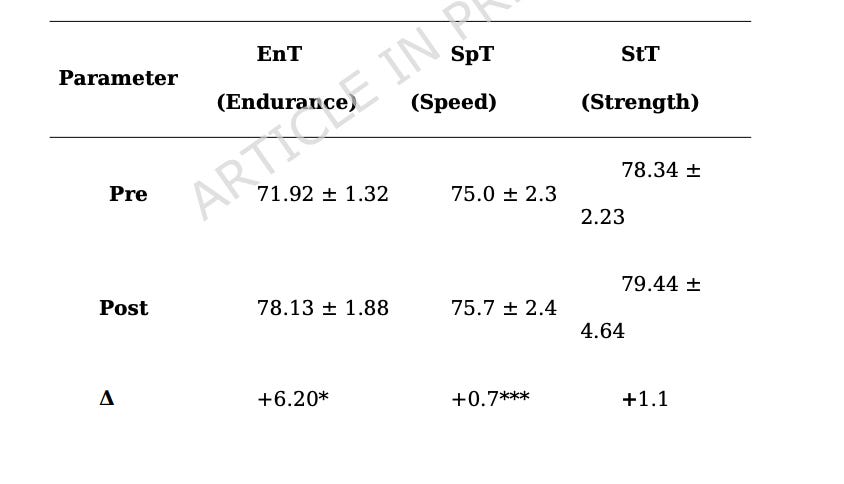
Instead of treating these training types as competing philosophies, the researchers looked at how each block contributed to different pieces of performance. Twenty elite Ethiopian male middle- and long-distance runners completed three six-week training blocks in a fixed order: endurance training first, then strength training, then speed training. There were two-week periods of normal mixed training between blocks. Testing was done before and after each phase, including estimated VO₂max, resting heart rate, running economy, blood markers like hemoglobin and hematocrit, 400-meter speed, a 5,.000-meter time trial, and a 12-minute Cooper test. The athletes trained and tested at altitude, roughly 2,400–2,700 meters (which reflects their normal environment).
The endurance block looked like classic aerobic development: high-volume continuous running, progressing toward about 75 miles/120 kilometers per week, mostly at moderate aerobic intensity. This phase produced the biggest aerobic and hematological changes.
Estimated VO₂max increased by about 6.2 ml/kg/min
Resting heart rate dropped by nearly 4 beats per minute
Hematocrit increased by 4.35 percentage points
Red blood cell count rose
Hemoglobin increased modestly.
Performance improved too: the Cooper test increased by 236 meters, and 5,000-meter time improved by about 18 seconds.
The strength block included circuit-style bodyweight strength work and hill sprints, which makes it more specific to running than a generic resistance program.
This block produced the largest improvement in running economy, with oxygen cost falling by 4.2%.
It also improved 400-meter speed by 1.21 seconds and shaved another 6 seconds from the 5,000-meter time trial.
VO₂max and most hematological markers did not change much during this phase, suggesting the main benefit was neuromuscular: better force production, better coordination, and possibly improved stiffness or elastic return.
The speed block used long intervals from 1,000 to 1,600 meters and shorter intervals from 200 to 800 meters, with intensity ranging from about 95% to 110% of estimated VO₂max.
This phase improved 400-meter speed by another second and 5,000-meter time by 9 seconds, with only a small increase in estimated VO₂max.
What this means for runners
Runners should stop thinking of endurance, strength, and speed as separate camps and start thinking about how they fit together across a training cycle.
For most runners, the sequence makes intuitive sense: use an endurance-focused phase to build aerobic capacity and durability, add strength and hills to improve economy and force production, then layer in faster intervals to sharpen race-specific speed. The biggest mistake would be copying the exact training of 13-minute 5K runners; the better lesson is the structure. Even elite athletes improved when training stress became more targeted and sequential. For recreational and competitive runners, that might mean spending several weeks emphasizing aerobic volume, then keeping the mileage stable while adding strength and hill work, and finally shifting toward faster intervals as race day approaches.
Why “Feelings” Outperform Complex Training Load Metrics
Runners are drowning in load metrics right now. Training load, recovery score, acute load, chronic load, biomechanical stress, heart-rate strain. The promise is that if you track enough of them, you’ll finally understand what your training is really costing you. But a new paper asks whether these metrics even agree with each other in the first place?
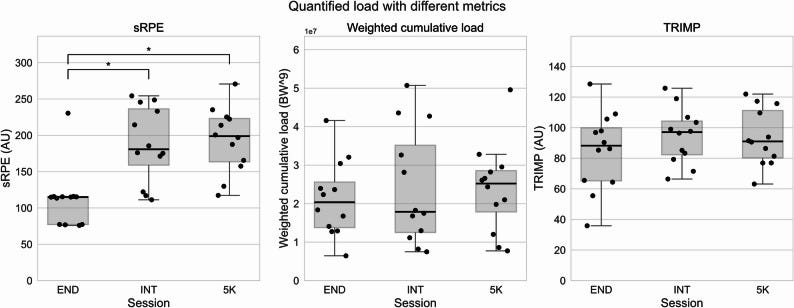
Researchers took 12 experienced recreational runners and had them complete three different outdoor runs: a 45-minute steady endurance run, a 5k submaximal effort, and a 5 x 1000-meter interval session with 2 minutes of rest between reps. The runners wore heart-rate monitors and special units that could measure their biomechanics on the pelvis and lower legs, and they also gave a rating of perceived exertion (RPE) after each workout. From that, the researchers calculated three different load measures: session RPE, heart-rate-based training impulse (TRIMP), and a biomechanical load score based on estimated peak ground reaction forces summed across the run. The biomechanical metric was not just counting steps or distance. It was trying to estimate how much cumulative loading the body experienced by weighing higher-impact steps more heavily (no pun intended).
Session RPE clearly separated the workouts in a way that makes intuitive sense. The endurance run felt easier, while the 5k and interval sessions felt harder. Average session RPE was about 112 for the endurance run, 188 for the interval session, and 194 for the 5k effort.
But TRIMP did not significantly distinguish the sessions. Neither did the biomechanical load metric. That is the heart of the paper. The runners felt a clear difference between session types, but the objective metrics did not really reflect that difference, at least not in a clean way. TRIMP averaged about 85 for the endurance run, 95 for intervals, and 94 for the 5k. Weighted cumulative load was also fairly similar across sessions. So, depending on which metric you looked at, these workouts either looked meaningfully different or basically the same.
The correlations tell a similar story. Session RPE and TRIMP had a moderate relationship (heart rate and perceived effort lined up somewhat), but biomechanical load seemed to be capturing something else entirely, or maybe not capturing load very well in this setup.
What this means
You should be very cautious about handing too much authority to any single load number on your watch.
Heart-rate load, biomechanical load, and perceived effort are not the same thing, and this study suggests they may diverge quite a bit depending on the session. I think that is a strong argument for keeping subjective feedback in the loop, even if you love data. How hard the run felt still matters. In practice, the best monitoring system is probably a simple combination of session type, duration, pace, heart rate, and (honest) session RPE, rather than chasing one supposedly all-knowing metric. The body is more complicated than that, and your training log should reflect it.
Thanks for reading. See you next Friday.
~Brady~
Ketone-IQ is high-performance energy in a bottle. I use it for post-exercise recovery along with enhancing focus, mood, and cognition. Take 30% off your order.

Create is the first “modern creatine” brand. They sell a wide range of creatine monohydrate gummies, and just launched a new creatine + electrolyte mix product plus travel-size packets of creatine gummies. They’re giving my audience 20% off their order.

ProBio Nutrition—the all-in-one supplement that I use every single day—is offering 20% off. My preference is the tangy orange flavor, but they also sell an unflavored “smoothie booster” that’s great in a shake, smoothie, or juice.

Equip Foods makes some of the cleanest, best-tasting protein products around. I am absolutely obsessed with their Prime grass-fed protein bars (the peanut butter ones are to die for, but they also just released a new chocolate peanut butter flavor).
