


Greetings!
Welcome to the Physiology Friday newsletter.
Details about the sponsors of this newsletter and deals on products I love, including Wild Roman skincare, Ketone-IQ, Equip Foods, and ProBio Nutrition can be found at the end of the post.
Energy balance is central to almost everything.
For most athletes trying to perform optimally, the goal is generally to be around energy balance, or perhaps even in a slight energy surplus during periods of heavy training, or “bulking… the phase I’m currently in. ;)
The basic idea is simple—you want enough energy coming in to maintain your body weight, preserve strength, support recovery, and, quite literally, have enough energy to train.
This is actually a pretty personal topic for me because energy intake is something I’ve thought about for most of my athletic career, and something I struggled with, especially when I was younger.
About a decade ago, I went through a period of chronic injury that included multiple bone stress injuries. After two or three of these in the span of just a few years, I decided I needed to figure out what was going on.
The pattern was frustratingly consistent. I would recover, gradually start running again, build my training back up, and then sustain another bone stress injury. Eventually, I had blood work done and got a DEXA scan to assess my bone mineral density. Without going into all of the results, they weren’t particularly encouraging. For someone my age and sex, my bone mineral density was quite low.
Of course, I had never had a DEXA scan before, so I had no baseline for comparison. Maybe my bone density had always been relatively low. But it forced me to think much more seriously about how I had been fueling (or, more accurately, underfueling).
A few years earlier, an injury had forced me to take roughly four to six months away from running. During that period, I ate poorly in the sense that I simply wasn’t eating enough, and I also wasn’t doing much resistance training. Looking back, I think that period may have been a major turning point. I likely lost muscle, strength, and potentially bone mass at the same time. When I eventually returned to running, I was probably starting from a somewhat vulnerable place. And I think that chronic underfueling was probably part of the problem.
Importantly, that underfueling wasn’t even occurring during a period of massive training volume. It was happening while I was injured!
Fortunately, this is something I’ve gotten much better at managing over the years through smarter training progression, better control of overall training load, more resistance training, and, quite simply, eating more and eating better.
But I’m certainly not the only endurance athlete who has struggled with this.
In sports science, chronic underfueling is often discussed within the framework of relative energy deficiency in sport, or RED-S. It’s the idea that an athlete’s energy intake is insufficient relative to the energy required to support both exercise and normal physiological function.
If you’re burning a huge amount of energy through training every day, you have to replace it. If you chronically don’t, the consequences extend beyond simply having a bad workout. Performance can decline, but low energy availability can also disrupt endocrine function, impair recovery and reproduction, alter metabolism, and compromise bone health. And, going back to my own experience, bone stress injuries are one of the major concerns in athletes who chronically underfuel.
But over the past several years, an interesting question has emerged within endurance sports:
Is underfueling purely an energy problem—or can it also be a carbohydrate problem?
Those two things obviously overlap, but carbohydrates have received particular attention because their role extends well beyond simply providing fuel for hard exercise. Carbohydrate availability can influence training quality, glycogen stores, endocrine signaling, immune function, and the cellular response to exercise. And something I’ve become especially interested in over the past few years is the relationship between carbohydrate availability and bone metabolism.
So, what happens if an athlete is technically eating enough calories to maintain energy balance, but carbohydrate availability is still very low?
Could carbohydrate restriction alone—independent of an overall calorie deficit—alter hormones, bone remodeling, or the physiological adaptations to endurance training? Mechanistically, that idea isn’t particularly far-fetched. Carbohydrate availability is one of the signals the body uses to sense the energetic demands of exercise and regulate the response to training.
And a new study set out to test exactly this question.1
The researchers separated energy availability from carbohydrate availability, asking whether restricting carbohydrate could produce some of the physiological consequences we normally associate with underfueling, even when total energy intake was adequate.
The results have some important practical implications for endurance athletes.
So let’s dig in.
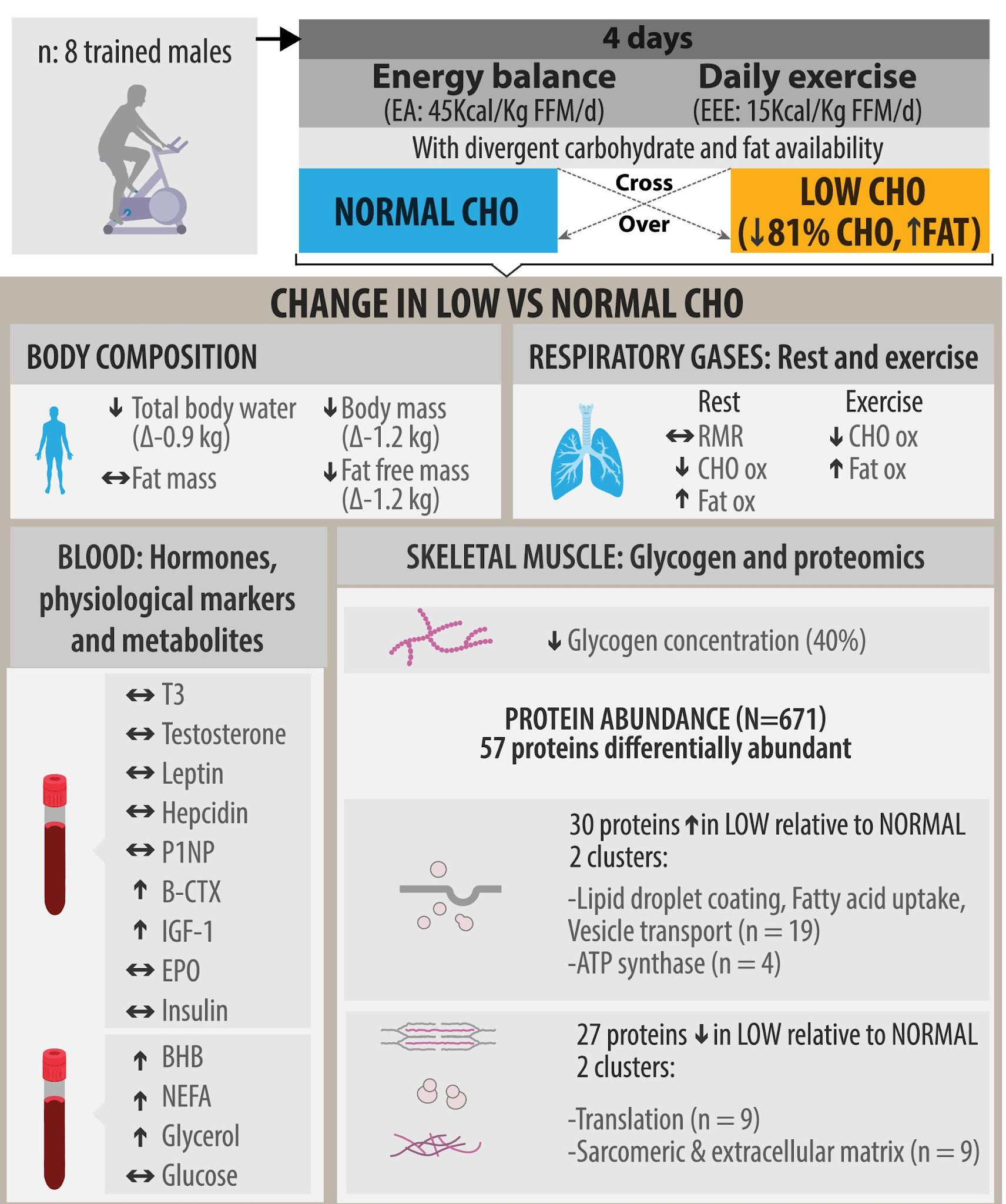
The researchers recruited eight healthy, endurance-trained men. They were 27 years old, on average, exercised at least three times per week, and had an average VO₂ max of 54. Fit, but not elite.
Every participant completed two dietary conditions lasting 4 days each:
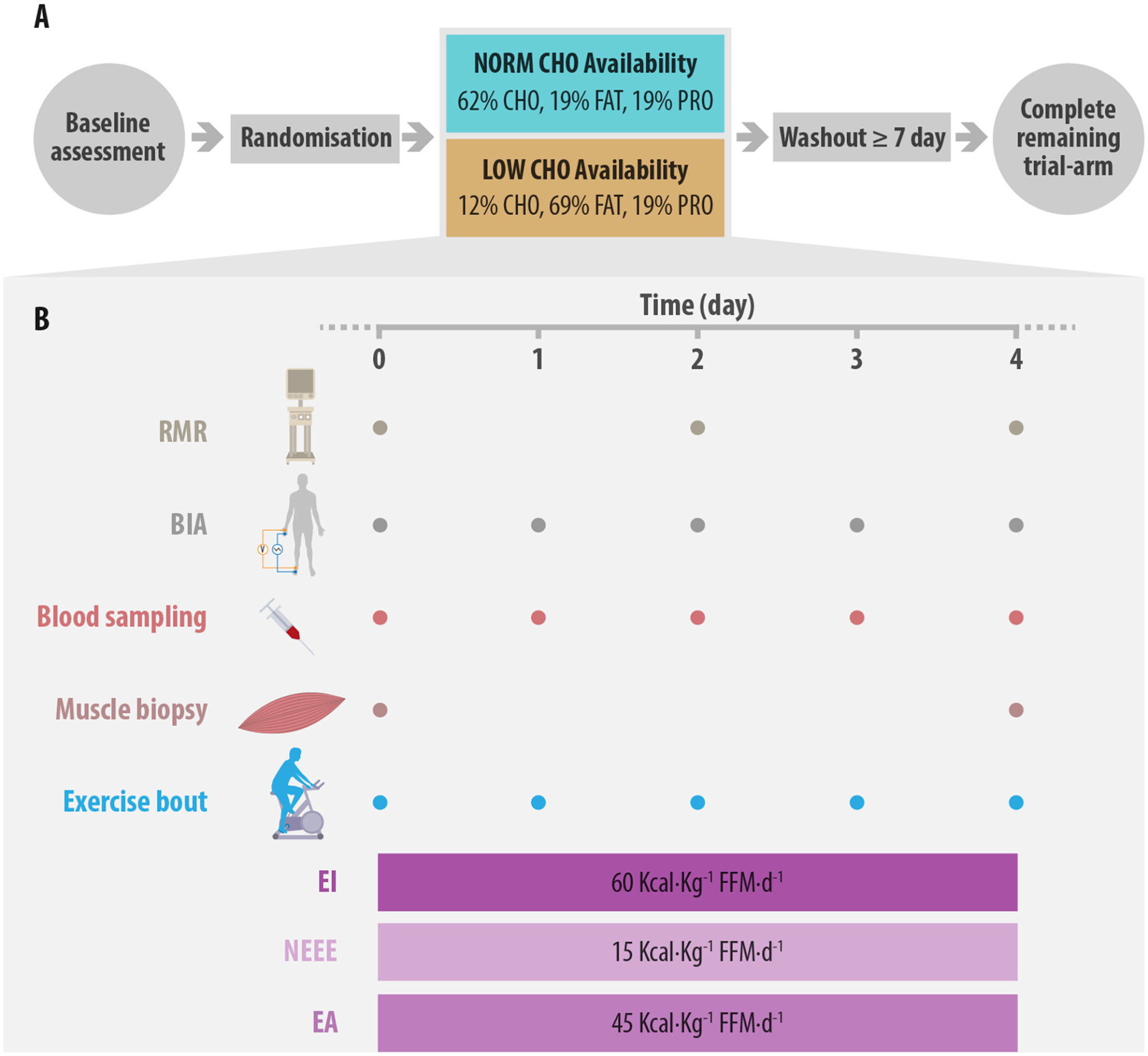
A normal-carbohydrate diet containing 62% carbohydrate, 19% fat, and 19% protein
A low-carbohydrate, high-fat diet containing 12% carbohydrate, 69% fat, and 19% protein
The diets were matched for total calories and protein. Participants consumed approximately 3,925 calories and 186 grams of protein per day in both conditions. That means the difference was almost entirely a swap between carbohydrate and fat: carbohydrate intake fell from 607 to 117 grams per day, while fat increased from 84 to 301 grams per day in the low-carbohydrate condition.
The researchers also controlled exercise energy expenditure. Every morning, the men completed a cycling session at approximately 63% of VO₂max until they had expended 15 calories per kilogram of fat-free mass—about 983 calories per session, which took 87–89 minutes. Combined with an energy intake of 60 calories per kilogram of fat-free mass, this maintained energy availability at 45 calories per kilogram of fat-free mass per day. That design was the point. The researchers created a substantial carbohydrate shortage without simultaneously imposing low energy availability.
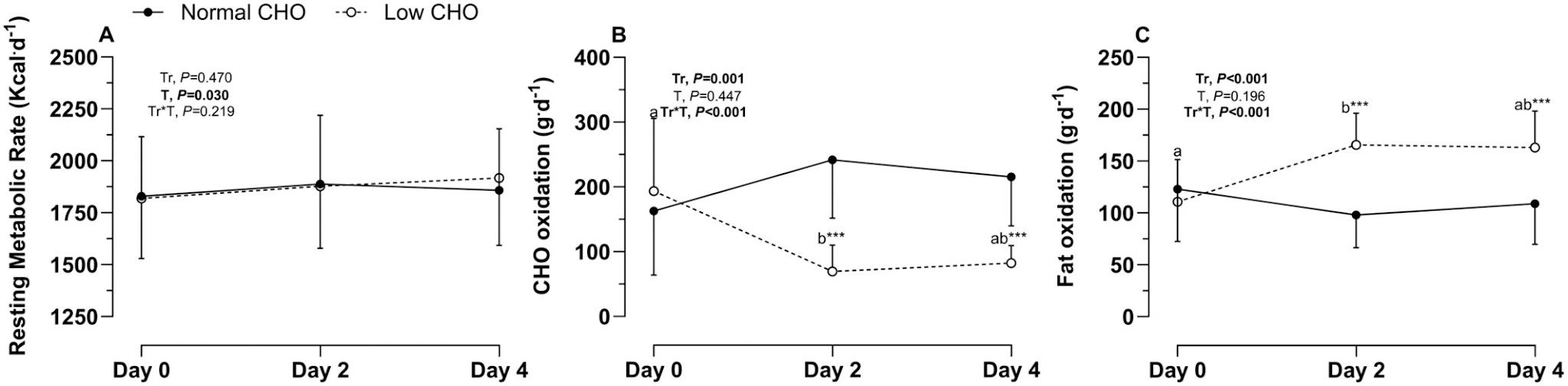
During the normal-carbohydrate condition, daily carbohydrate availability—the amount consumed minus the amount estimated to have been burned during exercise—remained between 433 and 446 grams per day. During the low-carbohydrate condition, it began at −52 grams per day and increased to only 15 grams per day by day 3. A negative value doesn’t mean the athletes had “negative carbohydrates” in their bodies (that’s not physiologically possible), but it means they burned more carbohydrate during exercise than they consumed that day and had to draw on stored glycogen to make up the difference.
By day 2, participants burned an estimated 172 fewer grams of carbohydrate and 67 more grams of fat per day at rest during the low-carb condition compared with the normal condition, and on day 4, they were still burning 133 fewer grams of carbohydrate and 54 more grams of fat each day. So we know that metabolism shifted in the expected direction.
That happened at rest, but also during exercise, where blood glucose and lactate were lower in the low-carb condition, while perceived effort was higher at every workload above 50 watts.
Furthermore, cycling efficiency improved across the normal-carbohydrate condition but not the low-carbohydrate condition.
In just 4 days, low-carb essentially made exercise “harder.” (This isn’t breaking news. Anyone familiar with this space is probably aware of the dismal data on the keto diet for exercise performance).
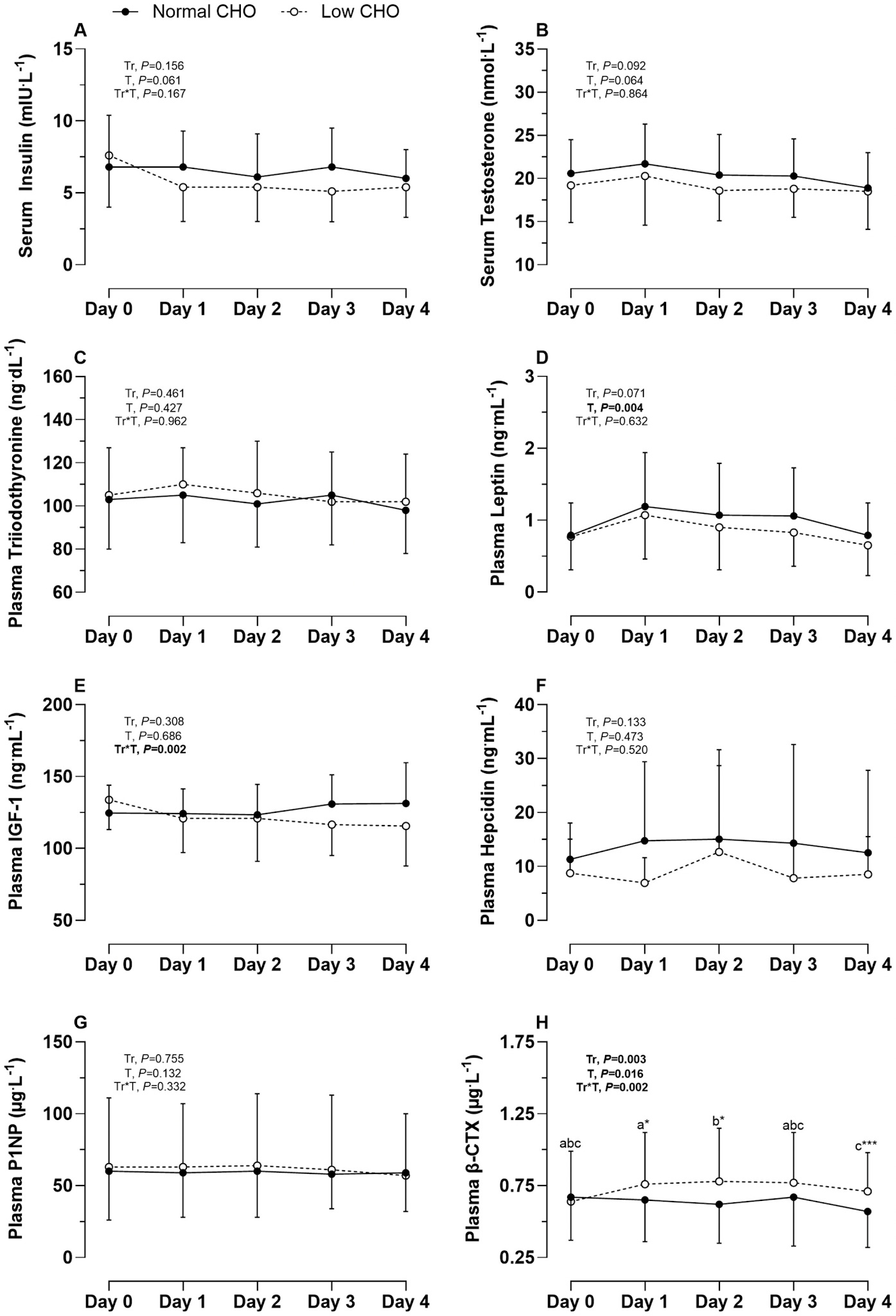
Despite this large metabolic shift, the broad endocrine disruption typically associated with low energy availability didn’t appear. Insulin, testosterone, triiodothyronine (T3, or active thyroid), leptin, hepcidin (a marker of iron homeostasis), and erythropoietin (EPO) were not altered by the low-carbohydrate diet. Resting metabolic rate was also unchanged.
On the other hand, IGF-1 (a marker of anabolic or growth signaling) tended to drop during the low-carb condition while rising during the normal condition.
The bone markers told a more selective story. And here is where I think the study provides some especially valuable information.
A marker of bone formation known as procollagen type 1 N-terminal propeptide (or P1NP) was unchanged in both conditions, but beta-CTX, a marker released during bone resorption or bone breakdown, increased during low-carb availability.
Let me be clear: this does not mean that the athletes lost measurable bone in four days. Beta-CTX is a circulating marker of bone breakdown, not a scan of bone density. But it suggests that bone resorption responds rapidly to carbohydrate restriction even when calories remain adequate and the broader endocrine environment looks relatively stable. What that looks like over several weeks to months is another question entirely. But it’s enough to warrant our attention.
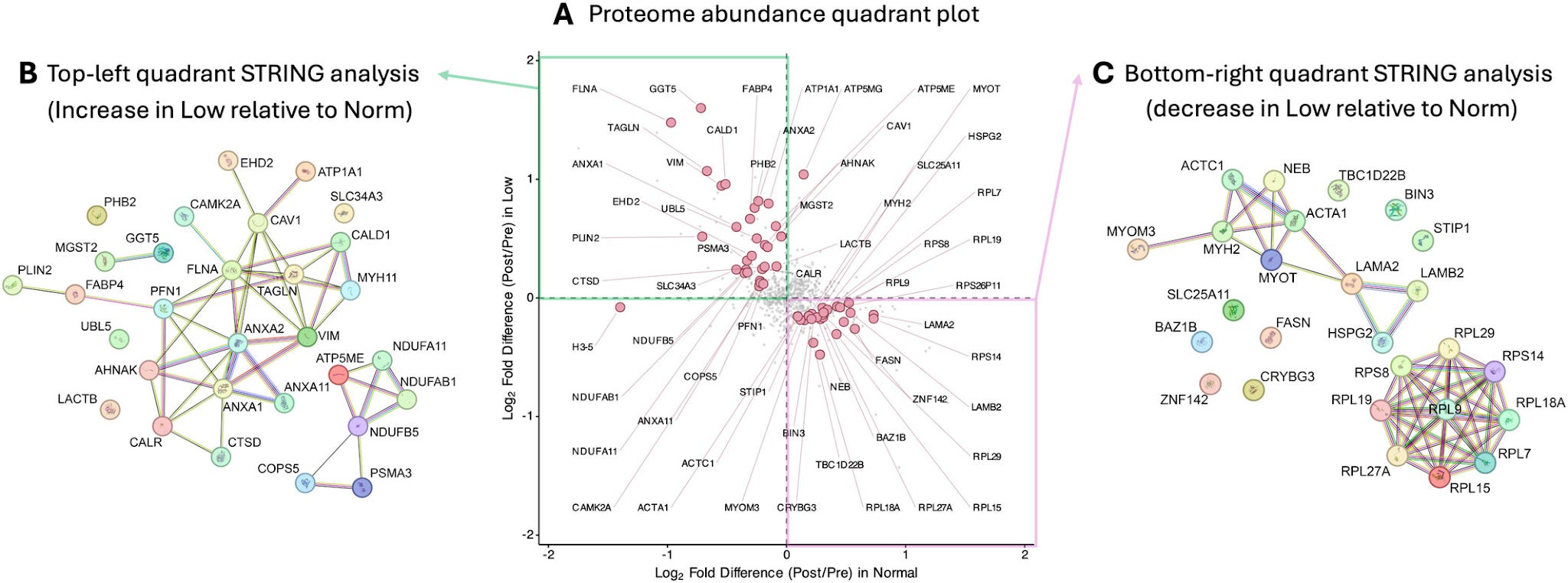
Lastly, the researchers analyzed the muscle proteome, essentially taking an inventory of which proteins became more or less abundant. A total of 57 responded differently between the two diets. Thirty proteins increased during low-carb availability and decreased during the normal diet. These were concentrated in pathways related to fatty-acid uptake, lipid-droplet handling, cellular transport, calcium signaling, and several components of mitochondrial energy production. The remaining 27 moved in the opposite direction. Many were proteins involved in translating genetic instructions into new proteins. Others were associated with the muscle’s contractile machinery and extracellular matrix.
Simply put, the muscle appeared to reorganize itself around greater fat handling while reducing parts of the machinery involved in protein production and muscle structure. But this wasn’t the sweeping increase in mitochondrial proteins the researchers expected. In fact, their initial hypothesis was that carbohydrate restriction would cause a drastic increase in the body’s oxidative (i.e., “fat-burning”) machinery. But that didn’t happen, and their reasoning is that this type of training response might, in fact, require an energy deficit, not just a carbohydrate deficit.
So, does low carbohydrate availability produce the same physiological state as low energy availability?
Not exactly.
Adequate energy availability appears to protect against many of the classic endocrine responses to underfueling. In this study—albeit over a very short time frame—the body didn’t enter the broad state of “hormonal conservation” we often associate with RED-S or low-energy availability. But the two diets still weren’t physiologically interchangeable, as we saw through the negative impact of low carbohydrate availability on bone breakdown markers and IGF-1.
Adequate calories may have kept the lights on, but they didn’t prevent every tissue from sensing that something was… missing.
To me, that’s the most interesting finding.
Energy availability and carbohydrate availability overlap, but they aren’t the same signal. The body can distinguish between a shortage of total energy and a shortage of the fuel most closely tied to endurance exercise. It is something I think many of us overlook. We assume that as long as enough fuel goes into the system, we’ll be okay. But the type of fuel we give the system matters too.
There are some important reasons not to take these results too far. They don’t prove that every low-carbohydrate training session is harmful. Nor does it tell us that athletes need to be “carbmaxxing” every hour of every day.
What it does show is that calories alone don’t tell us whether an athlete is optimally fueled for the work they’re doing.
There may still be situations in which temporarily training with lower glycogen availability is useful. The idea behind “train low” is that exposing muscle to exercise while carbohydrate availability is reduced may amplify certain cellular signals involved in endurance adaptation. Evidence supports its effectiveness when used strategically.
This study complicates that argument a bit, because (as the authors suggest), low glycogen alone may not be enough to produce the full adaptive response observed when athletes train with both low carbohydrate availability and an acute energy deficit.
That being said, intentionally adding an energy deficit brings its own obvious trade-offs—especially if repeated frequently. That makes carbohydrate periodization a much better framework than chronic carbohydrate restriction. The idea behind this strategy is that carbohydrate intake can rise and fall with training demand—more around long sessions, high-intensity workouts, races, and heavy training blocks, and potentially less when the workload and need for rapid recovery are lower.
But if you have a history of bone stress injuries (like me), low bone mineral density, or chronic underfueling risk, I’d be especially reluctant to treat carbohydrate restriction as a harmless shortcut to greater fat oxidation. Increasing fat burning is easy to measure. Whether the tradeoff is worthwhile is a much bigger question, and one I constantly wrestle with myself.
Looking back at my own history, I still think inadequate total energy intake was probably the biggest nutritional problem. But this study adds another layer to how I think about fueling.
Eating enough total energy is the foundation, without which every system involved in health, recovery, and performance can begin to suffer.
But “enough calories” and “adequately fueled” aren’t always synonymous.
I can consume sufficient energy on paper while still providing too little carbohydrate for the volume and intensity of training I’m asking my body to absorb. The consequences may not immediately appear in body weight, resting metabolism, or the hormones commonly measured in blood work. They may begin more quietly in things like bone turnover, glycogen availability, and the molecular signals governing how muscle repairs and adapts.
A study in just 8 young men might not be a strong enough data point to alter your dietary or fueling practices. But these early, interesting signals are, I think, the starting point for informing better protocols for health and performance.
I hope that it didn’t take you too much energy to finish this article. If it did, maybe it’s time to replenish those glycogen stores.
Thanks for reading. See you next Friday.
~Brady~
Ketone-IQ is high-performance energy in a bottle. I use it for post-exercise recovery along with enhancing focus, mood, and cognition. Take 30% off your order.

ProBio Nutrition—the all-in-one supplement that I use every single day—is offering 20% off. My preference is the tangy orange flavor, but they also sell an unflavored “smoothie booster” that’s great in a shake, smoothie, or juice.

Equip Foods makes some of the cleanest, best-tasting protein products around. I am absolutely obsessed with their Prime grass-fed protein bars (the peanut butter ones are to die for, but they also just released a new chocolate peanut butter flavor).

Wild Roman is an all-natural skincare brand for men who want a simple, effective routine designed to strengthen skin with modern formulas and wild-sourced ingredients. The company was started by my friend Sahil Bloom, and it’s the only skincare brand I’ve enjoyed using. Their biggest seller is the complete face routine, and I’m partial to the bar soap (seriously… it’s incredible stuff).
Shop through my link to get the $99 Face Routine, free Bar Soap, and free shipping, plus 15% off regularly priced items.

E. Mosquera-Lopez, H. L. Taylor, Y. Nishimura, et al., “ Low Carbohydrate Availability in Energy Balance Alters Bone Turnover and Muscle Proteomic Response With Limited Endocrine Disruption,” The FASEB Journal 40, no. 17 (2026): e72204, https://doi.org/10.1096/fj.202602531R.