

Greetings!
Welcome to the Physiology Friday newsletter.
Details about the sponsors of this newsletter and deals on products I love, including Wild Roman skincare, Ketone-IQ, Equip Foods, and ProBio Nutrition can be found at the end of the post.
I studied exercise physiology for more than 10 years. During that time, I learned all about how the human body responds and adapts to activity.
But one area I found most fascinating was inactivity physiology—how the body responds when it doesn't get an appropriate stimulus, or when modern-day conditions make vigorous movement no longer a requisite part of day-to-day life for most people.
My favorite example of inactivity physiology in action is a classic experiment known as the Dallas Bedrest study.1
Researchers took five healthy men in their early 20s, measured their cardiovascular fitness in detail, then confined them to bed for 20 days before putting them through an endurance-training program. In less than three weeks of inactivity, VO₂ max fell by about 27%. That’s a remarkable loss of aerobic capacity over an extraordinarily short period.
The study became even more valuable when researchers brought the same men back decades later: after 30 years of aging, their absolute VO₂ max had declined by only about 11–12%, meaning the three weeks of bed rest had impaired aerobic capacity more than three decades of normal aging! Six months of endurance training at age 50 restored their VO₂ max to roughly their untrained level at age 20, although not to their youthful trained peak. By age 60, VO₂ max had fallen to about the same level observed immediately after the original bed-rest period.
This highlights both how rapidly disuse can erode fitness and how much of that capacity remains responsive to exercise even later in life.
What also stands out about this study is that the participants were healthy young men! Aging changes physiology in ways that make the body more susceptible to periods of inactivity, which is why illness, injury, and even extended periods without training can be devastating for an older adult (some scientists refer to these as “catabolic crises”—periods when muscle mass or aerobic fitness drop so precipitously that they never fully recover).
Thanks to the Dallas Bedrest study and other research spanning several decades, we have a good idea of how disuse affects muscle function and physical capacity, but we know less about how extreme inactivity affects mitochondria, the energy-producing “powerhouses” of the body.
What better way to do that than to use the most extreme form of inactivity—complete bed rest.
That’s what a new study did. I don’t envy the participants, but the results are eye-opening.2
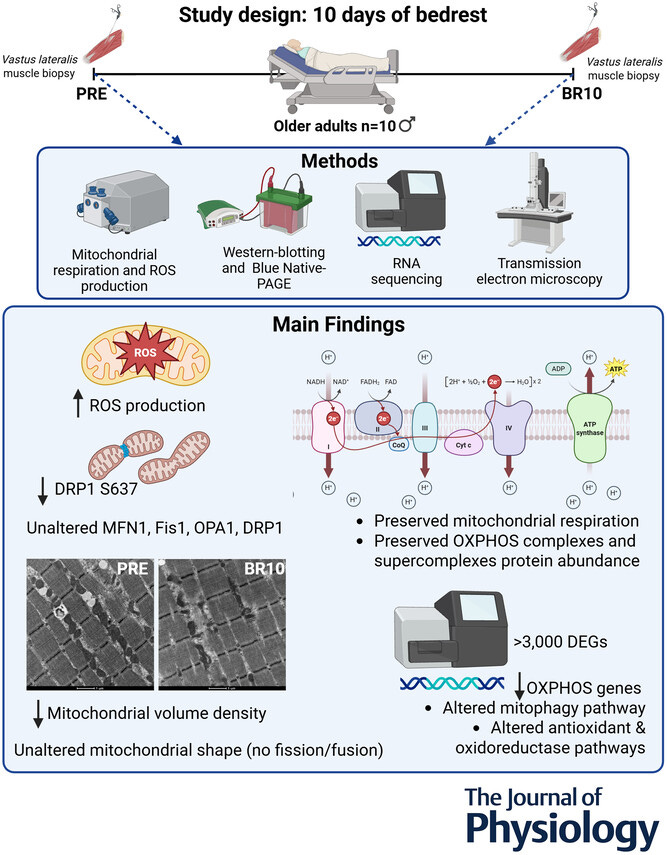
The study included 10 healthy older men with an average age of 68.5 years and no major cardiovascular, metabolic, neuromuscular, or inflammatory conditions.
For 10 days, the men remained in bed, horizontal, and avoided activity involving muscle contraction. You heard that right… 10 full days in bed with zero activity. Sounds like my worst nightmare. All 10 men completed the study without reported adverse effects. Measurements previously collected from the same cohort confirmed meaningful disuse across the study period—quadriceps muscle volume decreased by 6.2%, vastus lateralis (a muscle in the thigh) thickness dropped by 7.4%, and muscle strength declined by 13.3%.
Ten days was enough to produce measurable muscle loss and functional impairments.
So what happened at the cellular level?
The first surprise was what didn’t happen.
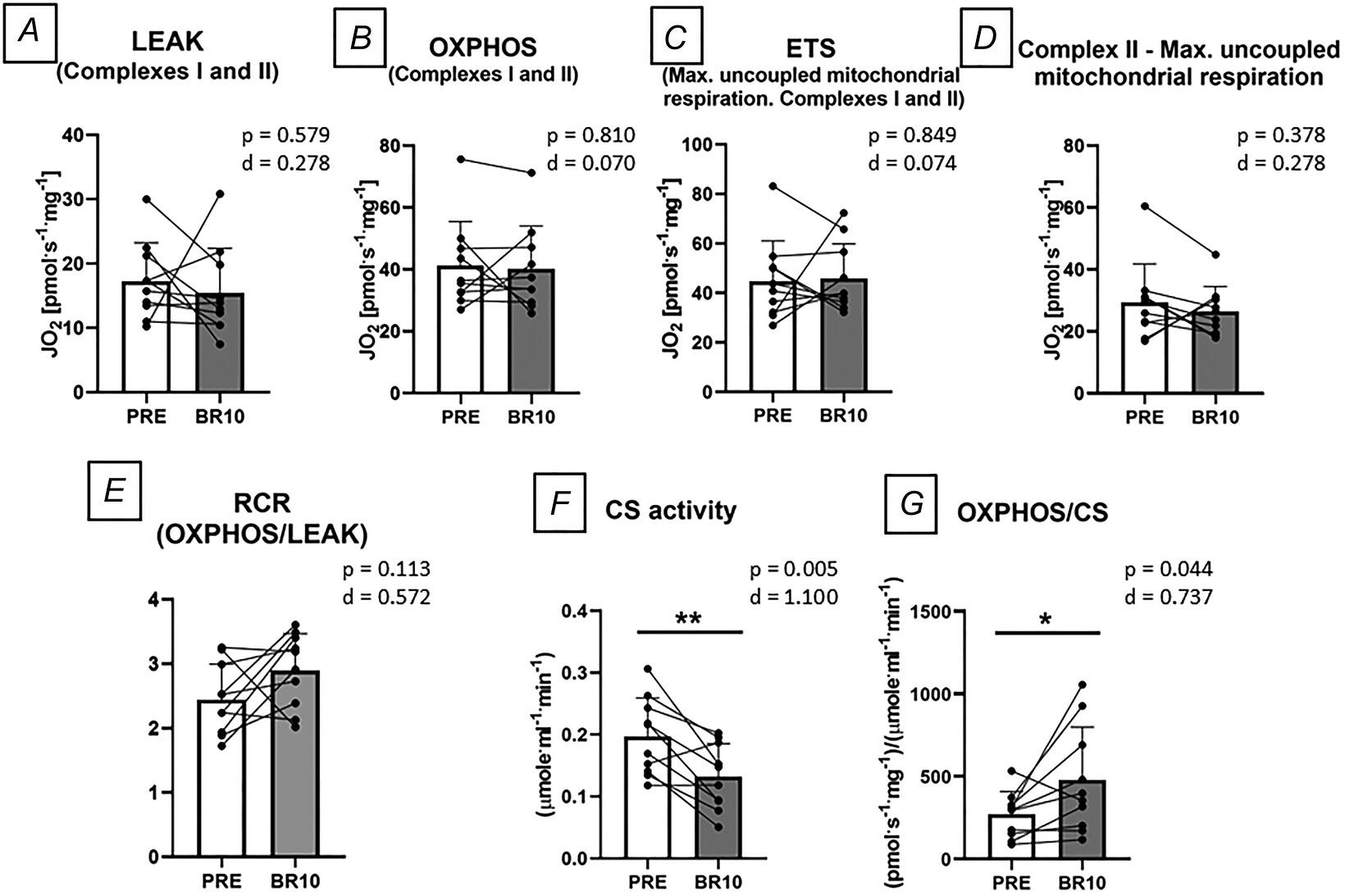
The mitochondria consumed the same amount of oxygen while idling, while actively producing ATP, and when pushed to their maximum capacity. In other words, “mitochondrial function” was unchanged after 10 days of bed rest.
But there appeared to be fewer engines overall. Citrate synthase activity, a commonly used marker of mitochondrial content, decreased. Mitochondrial volume density also fell, meaning mitochondria occupied less space within the muscle fibers after bed rest.
When the researchers divided ATP-producing capacity by mitochondrial content, mitochondrial respiration actually appeared to increase relative to the estimated number of mitochondria. The remaining mitochondria seemed to be maintaining the workload of the larger population of mitochondria before bed rest!
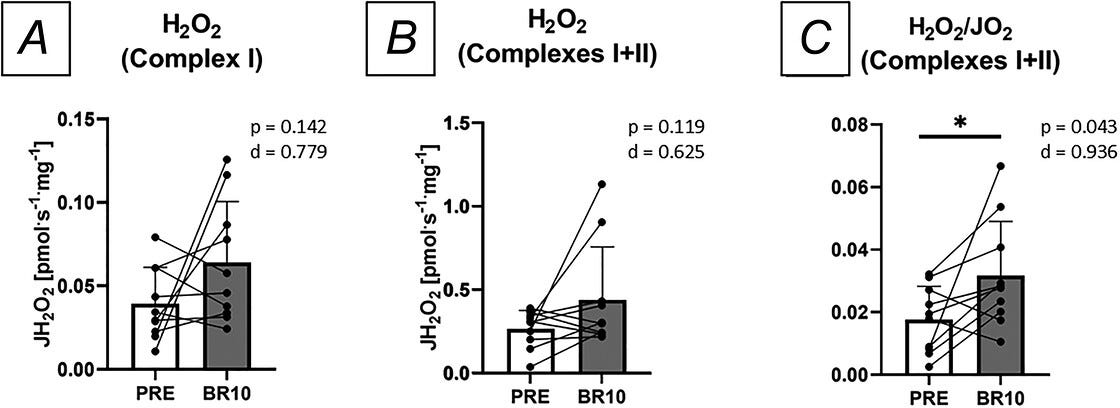
But mitochondria do more than produce ATP. They also generate reactive oxygen species as a byproduct of moving electrons through the respiratory chain. In small amounts, these molecules act as useful signals. In excess, they can contribute to oxidative stress and damage cells, tissues, and even DNA.
After bed rest, the mitochondria released more reactive oxygen species. But the effect depended on the metabolic conditions. The problem appeared mainly when they were idling. When energy demand arrived, their normal ability to produce ATP—and avoid reactive oxygen species production—was preserved.
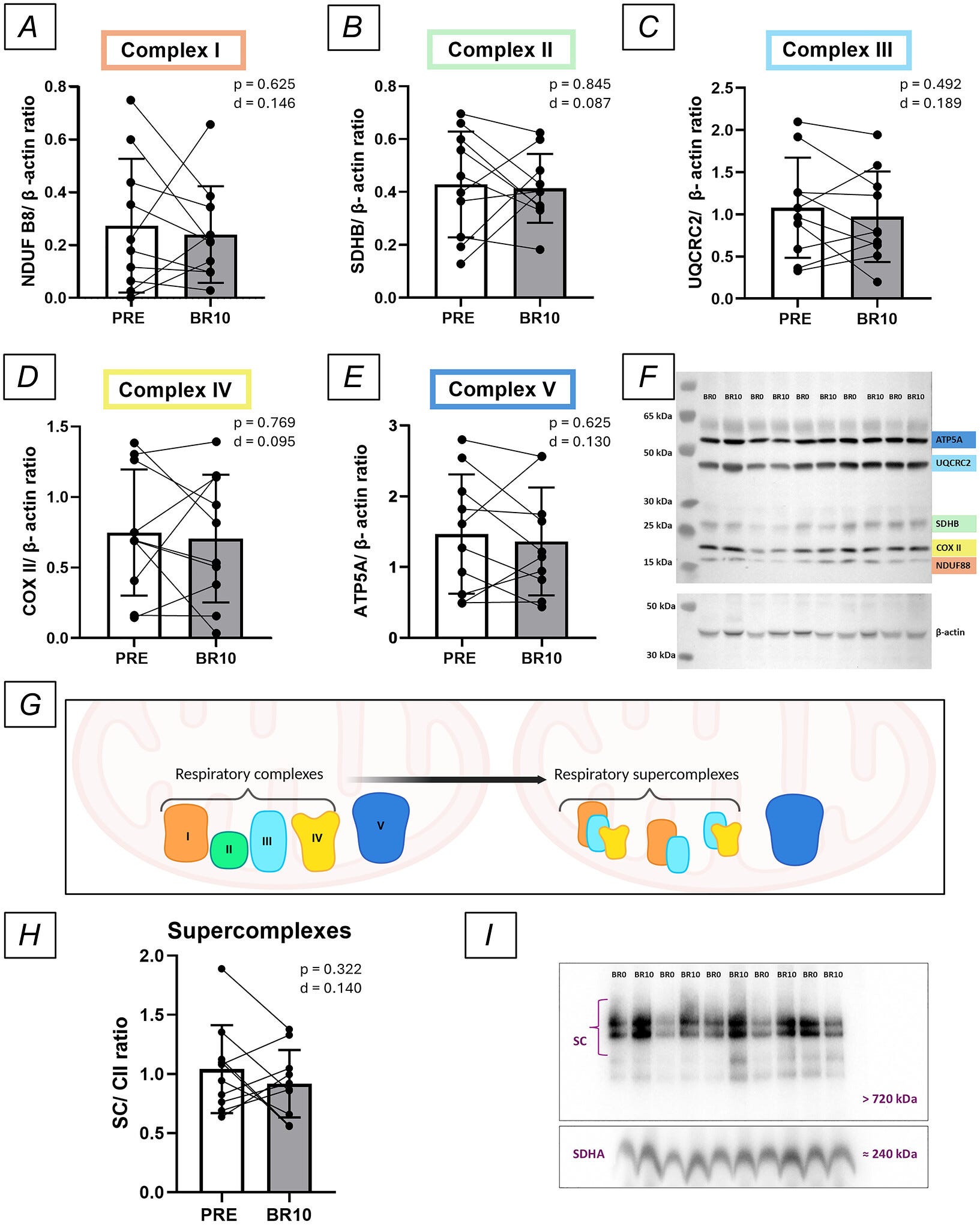
One obvious explanation for impaired mitochondrial function would be damage to the energy-producing machinery itself. The researchers didn’t find that.
The quantities of the protein machinery that moves electrons and produces ATP remained unchanged. So even though the mitochondrial population had become smaller, the measured energy-producing machinery within them had not yet noticeably deteriorated.
Mitochondria also constantly divide, fuse, and remodel themselves. After bed rest, the mitochondria appeared to become more permissive to a process known as fission (when one mitochondrion divides into two), but when researchers manually assessed more than 11,000 individual mitochondria, they found no change in the visible shape of the mitochondria (which they refer to as elongation, branching, or structural complexity). Other proteins involved in mitochondrial fission, fusion, and quality control also remained unchanged.
Some of the largest changes appeared at the level of gene expression.
After only 10 days, 3,217 genes were expressed differently than before bed rest. Seventy-six were strongly upregulated, 113 were strongly downregulated, and the rest changed more moderately.
Many genes involved in aerobic respiration, the electron transport chain, ATP production, mitochondrial protein assembly, fuel transport, and the citric-acid cycle (aka the Krebs cycle) were dialed down. Genes associated with glycolysis (sugar-burning) and cellular stress were among those dialed up.
What does all of this mean?
After just 10 days of bed rest, the muscle was already reducing the genetic instructions used to build and maintain mitochondria. But the respiratory proteins manufactured before bed rest were still present, and mitochondria were still functioning normally, for the most part. That’s a pretty strong indication that the brief—albeit extreme—period of inactivity put these men into what we can consider a “transition state” before the mitochondria have officially begun to shut down. These signals were the canary in the coal mine, so to speak, for the larger process of deconditioning that was yet to come (had they stayed in bed any longer).
I think this study underscores two important lessons about (extreme) inactivity.
The first is that changes happen fast. Anyone who has ever taken even a brief period away from their usual exercise or training schedule has probably felt this. Getting out of shape is much easier than getting into (or back into) it. It’s a cruel reality of physiology. A bed rest study is the most extreme example of an off-season, but it’s a vivid reminder that, physiologically speaking, “use it or lose it” is very, very real.
The second lesson is the more promising one—the human body is incredibly resilient and adaptable. One result of the Dallas Bedrest study that I omitted was that, after the initial 3 weeks of bed rest, the participants completed eight weeks of intensive endurance training, during which their average VO₂ max rose by about 45% from the post-bed-rest value and roughly 18% above their original baseline! The deconditioning they experienced during bed rest was entirely reversible.
The current study illustrates this adaptability—the mitochondria appeared to become more efficient in some ways during bed rest, even in the context of some broader, adverse changes. It seems to me that over a short enough time, even extreme inactivity isn’t enough to cause irreparable damage or dysfunction, at least at the fundamental level of the body’s energy-producing factories.
Now for the practical part.
Of course, the obvious lesson here is to avoid a situation that requires you to lie in a bed for a week or more. But life happens—we get sick, we undergo a major surgery, or we’re injured in a way that prohibits us from weight-bearing activity (I’ve been there). Should we panic when this happens? No. But we should be aware of the consequences and think about the before and after, should such a scenario occur.
It’s a great argument for “prehab”—keeping your fitness and muscle mass as high as possible going into any extended period of inactivity as a “buffer” against deconditioning. This is easy if the inactivity is planned, harder if it’s not. So yes—I am saying you should just stay in good shape year-round.
It’s also a reason to have a post-inactivity strategy for regaining fitness. An intensive 6–8 weeks of resistance or aerobic training is probably enough to reverse any damage done during extended downtime. Emphasis on intensive.
If I ever encounter a situation where I’m confined to a bed for 10 days, please pray for me and those around me.
Thanks for reading. See you next Friday.
~Brady~
Ketone-IQ is high-performance energy in a bottle. I use it for post-exercise recovery along with enhancing focus, mood, and cognition. Take 30% off your order.

ProBio Nutrition—the all-in-one supplement that I use every single day—is offering 20% off. My preference is the tangy orange flavor, but they also sell an unflavored “smoothie booster” that’s great in a shake, smoothie, or juice.

Equip Foods makes some of the cleanest, best-tasting protein products around. I am absolutely obsessed with their Prime grass-fed protein bars (the peanut butter ones are to die for, but they also just released a new chocolate peanut butter flavor).

Wild Roman is an all-natural skincare brand for men who want a simple, effective routine designed to strengthen skin with modern formulas and wild-sourced ingredients. The company was started by my friend Sahil Bloom, and it’s the only skincare brand I’ve enjoyed using. Their biggest seller is the complete face routine, and I’m partial to the bar soap (seriously… it’s incredible stuff).
Shop through my link to get the $99 Face Routine, free Bar Soap, and free shipping, plus 15% off regularly priced items.
