
Greetings!
This is something I’ve been excited to announce for a long time.
I’m releasing the second edition of my book, VO₂ Max Essentials, right here on Substack. This new edition is a rewrite of the first edition (which you can find on Amazon), and it’s a major update.
So, for the time being, I’ll be publishing one chapter of the book every single week, on Friday, in place of my usual Physiology Friday newsletter. I hope that’s a trade-off that pleases you, because it’s an exciting project I can’t wait to share.
On that note, here’s how the release will work. If you’re a subscriber—free or paid—you’ll get to read all of the chapters for free. But at the end of the release, once the book is finally published, paid subscribers will get a copy of the book as a PDF or ePub as a token of gratitude. So if you’d like to support this project and appreciate my work, please consider upgrading your membership! Sincerest thanks to all of you who already do.
Throughout the release, I’ll also be highlighting a sponsor or partner at the start of each post/chapter. It’s a small way to promote the products I love and share cool things with all of you! For now, you can find some of those at the end of this post.
On that note… here’s the first installment (of many). The preface… or why the heck I decided to rewrite this book in the first place.
Preface to the New Edition
When I published the first edition of VO₂ Max Essentials in 2023, I had a simple goal, and that was to put a clear, evidence-based primer in the hands of people who kept hearing “VO₂ max” in podcasts but couldn’t find a single place that explained what it is, why it predicts how long you live, and how to actually raise it.
That little book (which initially was just a series of blog posts) did its job. It was short on purpose—an essentials guide you could finish in a weekend. It walked through the longevity evidence, the aging curve, the oxygen-transport cascade, trainability (including the myth of the “non-responder”), field testing, and a handful of high-intensity protocols. If you read it and walked away wanting a lab test and a few more interval sessions on your calendar, I’d call that a win.
But the conversation didn’t stay still. And neither did the gaps I left on the table.
Why rewrite (not just reprint)
Three things changed at once…
First, the culture caught up, and then overshot. Cardiorespiratory fitness went from niche exercise-science jargon to a lifestyle headline. Zone 2 training exploded across social media and longevity discourse. Wearables started spitting out a “VO₂ max” estimate with the confidence of a lab cart. Clinicians and coaches began talking about aerobic capacity the way they talk about blood pressure. That awareness is something to celebrate. It’s also something that needs better scaffolding.
Second, the science kept moving in useful directions. The core story from 2023 still holds, and likely always will: VO₂ max is a whole-body vital sign; higher is better, especially if you’re climbing out of the bottom of the pack;12 central oxygen delivery (think cardiac output and stroke volume) remains the main limiter for whole-body exercise;3 and almost everyone can improve with the right dose.4
What’s richer now is the surrounding map—peripheral extraction and mitochondria when they do matter, critical speed and durability as performance frames alongside maximal aerobic capacity, better guidance on sex differences and life stages, clearer validation (and limitations) of wearable estimates, and a more honest integration of easy volume with true VO₂-max and high-intensity work. The first edition gestured at some of this and skipped other pieces entirely. This edition digs in.
Third, people still need a playbook. The 2023 book told you that HIIT outperforms moderate work for raising VO₂ max,56 and it pointed at classic comparisons like the Norwegian 4×4. It did not hand you a week-by-week path to better fitness. I called some of that “beyond the scope.” Fair for a primer, but incomplete for a foundational book. If VO₂ max really is the Fountain of Youth (and I still think that’s more than marketing), then it’s essential to pair the physiology with a training plan.
So this version isn’t a coat of paint. It’s a rebuild on the same foundation as the first edition: same spine, same voice, more depth, and a concrete VO₂ max playbook.
What changed since 2023 (the short tour)
The zone 2 boom. Easy aerobic work is not new. Calling everything “zone 2,” debating whether your watch’s zone chart is holy scripture, and treating low intensity as the only longevity lever—that’s new. In the first edition, I mostly sidestepped the debate and admitted the term was fuzzy. Easy volume builds mitochondria, capillarity, fat oxidation, and durability.7 It does a poor job of raising VO₂ max once you’re already fit.5 Both statements can be true. This edition gives zone 2 a full chapter so we can celebrate the awareness and aim the tool correctly.
Longevity discourse went mainstream. VO₂ max left the lab and entered the dinner-table (and social media) arguments about how to live longer and better. That’s good. It also means influencer certainty often outruns the papers. You’ll still get my takes here (opinionated asides included), but I’ll be clearer about what landmark epidemiology and training trials show.
Wearables are everywhere. Your watch, ring, or strap will happily estimate VO₂ max after a few runs. Those estimates can track direction over months if you use them sanely. They are not a cardiopulmonary exercise test.8910 Nor are they a diagnosis. In 2023 I said “Sorry” about over-trusting Garmin and WHOOP numbers. I’m still sorry—and this edition will show you why, what lab testing actually adds, and when a field test is good enough.
What this edition promises
Deeper science.
Expanded longevity evidence with dose–response figures handled carefully.
A fuller oxygen-transport cascade, including the periphery.
Aging with masters athletes, detraining, and realistic expectations.
Trainability with genetics in perspective.
New chapters on sex differences, life stages, and clinical populations.
Modern testing including CPET, verification, field equations, and wearables validation.
Training science beyond “HIIT is good”: zone 2 and thresholds, intensity distribution (polarized and pyramidal), periodization, strength, heat, altitude, and even a lean nutrition chapter.
A playbook.
Shared principles, then levels—from beginner/returning to intermediate, competitive amateur, and masters/longevity-focused—plus time-crunched and travel versions. It won’t turn you into an elite by Christmas, but it will help you improve no matter your starting point.
Guidance for the performance-focused athlete and longevity-focused optimizer (and those who fall into both categories).
How to read what follows
If you read the 2023 edition, you’ll recognize the spine: why VO₂ max matters → what sets the ceiling → how to measure it → how to train it. What’s new sits on top of that spine—especially the measuring and training sections, the playbook, and the parts of physiology and population nuance I underwrote the first time.
I wrote the first edition because VO₂ max had breached public discourse and deserved better than buzzwords. I rewrote this one because the buzzwords got out of hand, the science got richer, and you deserved a guide that goes deeper and tells you what to do next. Plus… there was just so much more I wanted (needed) to talk about!
I hope this book helps you put your heart under the microscope and then train like the number matters, because I think it does.
~Brady

Ketone-IQ is high-performance energy in a bottle. I use it for post-exercise recovery along with enhancing focus, mood, and cognition. Take 30% off your order.
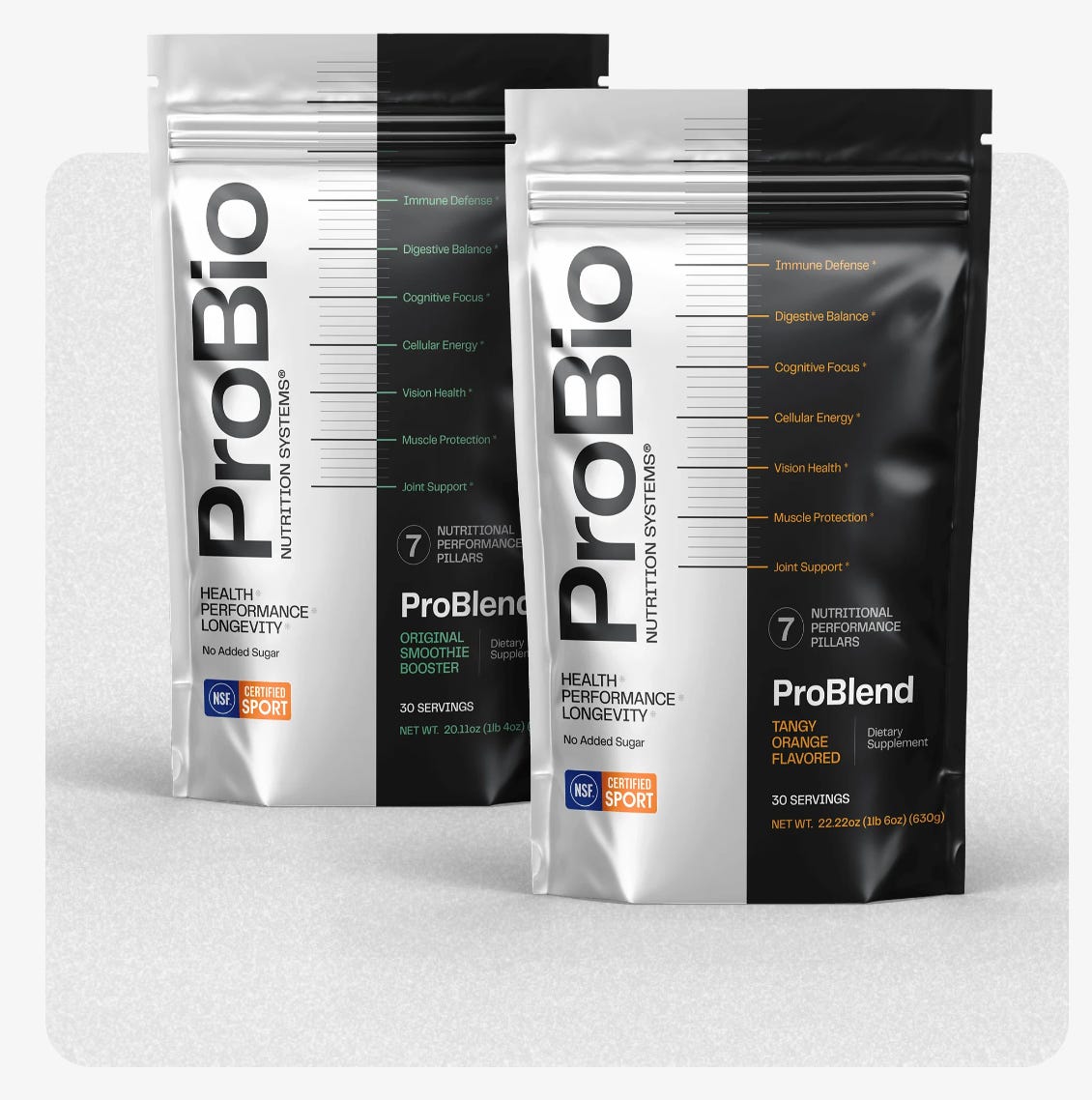
ProBio Nutrition—the all-in-one supplement that I use every single day—is offering 20% off with the code HOLMER20 at checkout. My preference is the tangy orange flavor, but they also sell an unflavored “smoothie booster” that’s great in a shake, smoothie, or juice.

Equip Foods makes some of the cleanest, best-tasting protein products around. I am absolutely obsessed with their Prime grass-fed protein bars (the peanut butter ones are to die for, but they also just released a new chocolate peanut butter flavor).
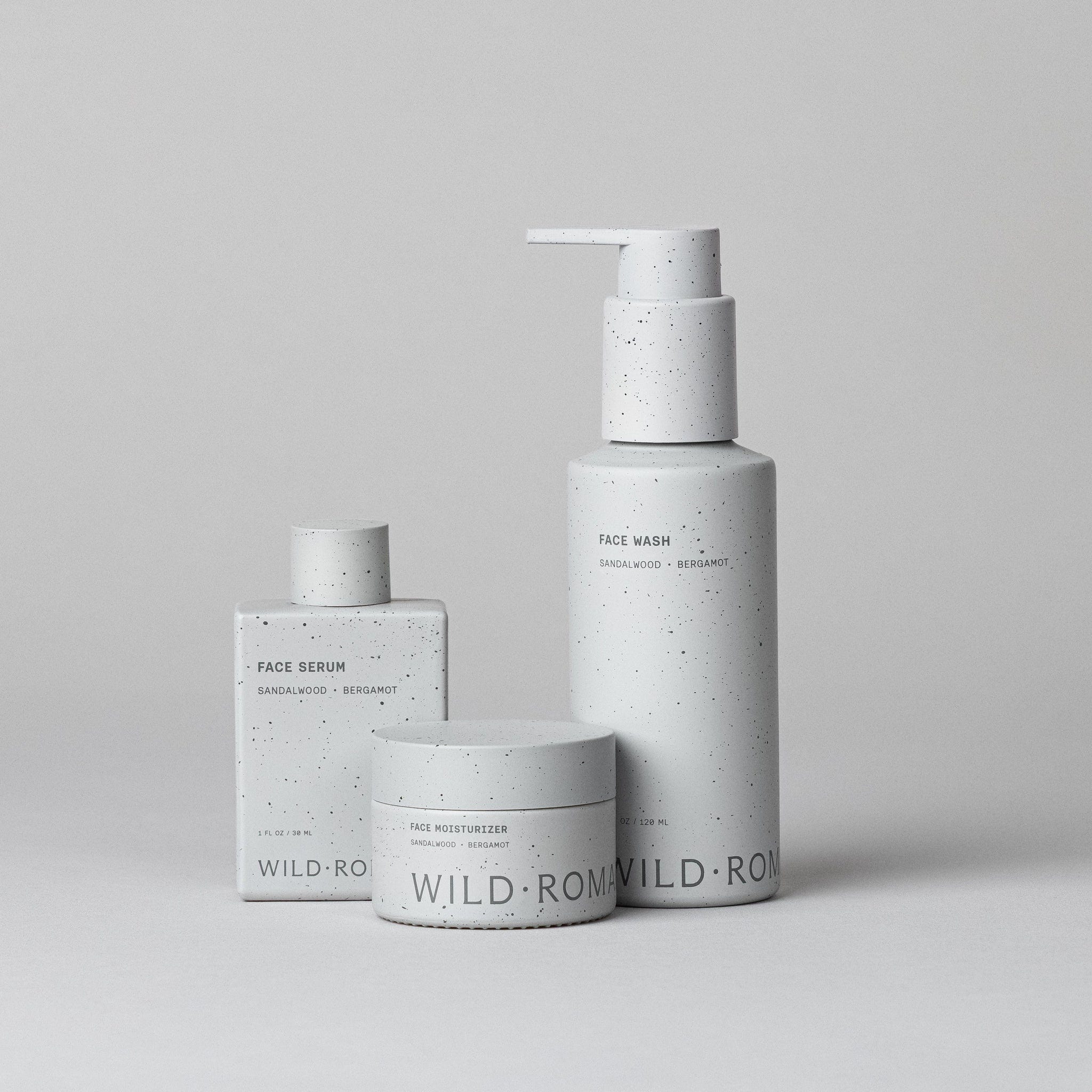
Wild Roman is an all-natural skincare brand for men who want a simple, effective routine designed to strengthen skin with modern formulas and wild-sourced ingredients. The company was started by my friend Sahil Bloom, and it’s the only skincare brand I’ve enjoyed using. Their biggest seller is the complete face routine, and I’m partial to the bar soap (seriously… it’s incredible stuff).
Shop through my link to get the $99 Face Routine, free Bar Soap, and free shipping, plus 15% off regularly priced items.
Ross R, Blair SN, Arena R, et al. 2016. Importance of assessing cardiorespiratory fitness in clinical practice: A case for fitness as a clinical vital sign: A scientific statement from the American Heart Association. Circulation. 134(24):e653-e699. doi:10.1161/CIR.0000000000000461
Mandsager K, Harb S, Cremer P, Phelan D, Nissen SE, Jaber W. 2018. Association of cardiorespiratory fitness with long-term mortality among adults undergoing exercise treadmill testing. JAMA Network Open. 1(6):e183605. doi:10.1001/jamanetworkopen.2018.3605
Bassett DR, Howley ET. 2000. Limiting factors for maximum oxygen uptake and determinants of endurance performance. Medicine & Science in Sports & Exercise. 32(1):70-84. doi:10.1097/00005768-200001000-00012
Joyner MJ, Lundby C. 2018. Concepts about VO2max and trainability are context dependent. Exercise and Sport Sciences Reviews. 46(3):138-143. doi:10.1249/jes.0000000000000150
Helgerud J, Hoydal K, Wang E, et al. 2007. Aerobic high-intensity intervals improve VO2max more than moderate training. Medicine & Science in Sports & Exercise. 39(4):665-671. doi:10.1249/mss.0b013e3180304570
Milanovic Z, Sporis G, Weston M. 2015. Effectiveness of high-intensity interval training (HIT) and continuous endurance training for VO2max improvements: A systematic review and meta-analysis of controlled trials. Sports Medicine. 45(10):1469-1481. doi:10.1007/s40279-015-0365-0
Holloszy JO, Coyle EF. 1984. Adaptations of skeletal muscle to endurance exercise and their metabolic consequences. Journal of Applied Physiology. 56(4):831-838. doi:10.1152/jappl.1984.56.4.831
Caserman P, Yum S, Göbel S, Reif A, Matura S. 2024. Assessing the Accuracy of Smartwatch-Based Estimation of Maximum Oxygen Uptake Using the Apple Watch Series 7: Validation Study. JMIR Biomedical Engineering. 9:e59459. doi:10.2196/59459
Lambe R, O’Grady B, Baldwin M, Doherty C. 2025. Investigating the accuracy of Apple Watch VO2 max measurements: A validation study. PLOS One. 20(5):e0323741. doi:10.1371/journal.pone.0323741
Železnik Mežan L. 2025. Accuracy of wearables for determining the maximal oxygen uptake and lactate threshold: a qualitative systematic review. Frontiers in Sports and Active Living. 7:1707991. doi:10.3389/fspor.2025.1707991
Your line about wearables spitting out a VO₂ max estimate 'with the confidence of a lab cart' landed with me — and it's the part I'd love to see the new edition press harder on. From the pharmacy side, there's a wrinkle that rarely makes it into the fitness conversation: a huge share of the people tracking these numbers are on rate-limiting drugs. A beta-blocker blunts the heart-rate response that both lab protocols and wearable algorithms lean on, so the estimate drifts — and the patient reads a declining number as their fitness failing, when it's the medication doing exactly what it was prescribed to do. Same story, softer version, with some calcium channel blockers. It makes your point about VO₂ max as a clinical vital sign even stronger, honestly: if we're going to treat it like blood pressure, we need the same discipline about what confounds the reading. Looking forward to the chapter on testing — will you cover medication effects there?