


Greetings!
Welcome to the Physiology Friday newsletter.
Details about the sponsors of this newsletter and deals on products I love, including Wild Roman skincare, Ketone-IQ, Equip Foods, and ProBio Nutrition can be found at the end of the post.
If there’s one topic I keep returning to every time a new study comes out, it’s endurance exercise and heart disease. Part of that is, of course, personal. I’m a lifelong endurance athlete with no plans to stop. But it’s also because the science is complex and continually evolving.
I’ve written about this a lot over the years. Today I want to pull it all into one state-of-the-science review, built from the research I’ve already covered here, with some links back to each original post if you want the details!
Here’s the question running through all of it:
If exercise is one of the best things you can do for your heart, why do so many lifelong endurance athletes have so much coronary plaque? And should those of us who train a lot be worried?
Let’s dig in.
The paradox
Exercise is the real fountain of youth. The biggest drop in risk comes from going from nothing to something, and in my opinion the minimum guideline dose (150 minutes moderate or 75 minutes vigorous per week) is actually a bit too low. The benefits also seem to have a high ceiling.
A high VO2 max is one of the most potent predictors of all-cause mortality, and the lowest risk shows up in people with so-called “elite” levels of aerobic fitness.
Athletes tend to live longer than the general population, with about 30–40% lower all-cause and cardiovascular mortality.
Long-distance runners and cross-country skiers have lived 2.8–5.7 years longer than reference populations.
(I discuss these data in my post The Latest Evidence on Atherosclerosis in Athletes.)
But for at least a decade, one finding has refused to fit this neat story. People who do extreme volumes of exercise, or who have done high levels of endurance exercise for most of their lives (most of them men), seem to have more markers of cardiovascular disease. In particular, they have higher levels of coronary artery calcium (CAC) and more atherosclerotic plaque.
That’s the paradox: high levels of exercise build the fitness that lowers mortality, yet seem to come with more plaque in the arteries that feed the heart.
A quick sidebar on CAC. CAC is calcium buildup in the coronary arteries, usually accompanying plaque, measured with cardiac CT. Having CAC, and seeing it rise over time, is linked to a higher risk of heart attack and stroke.
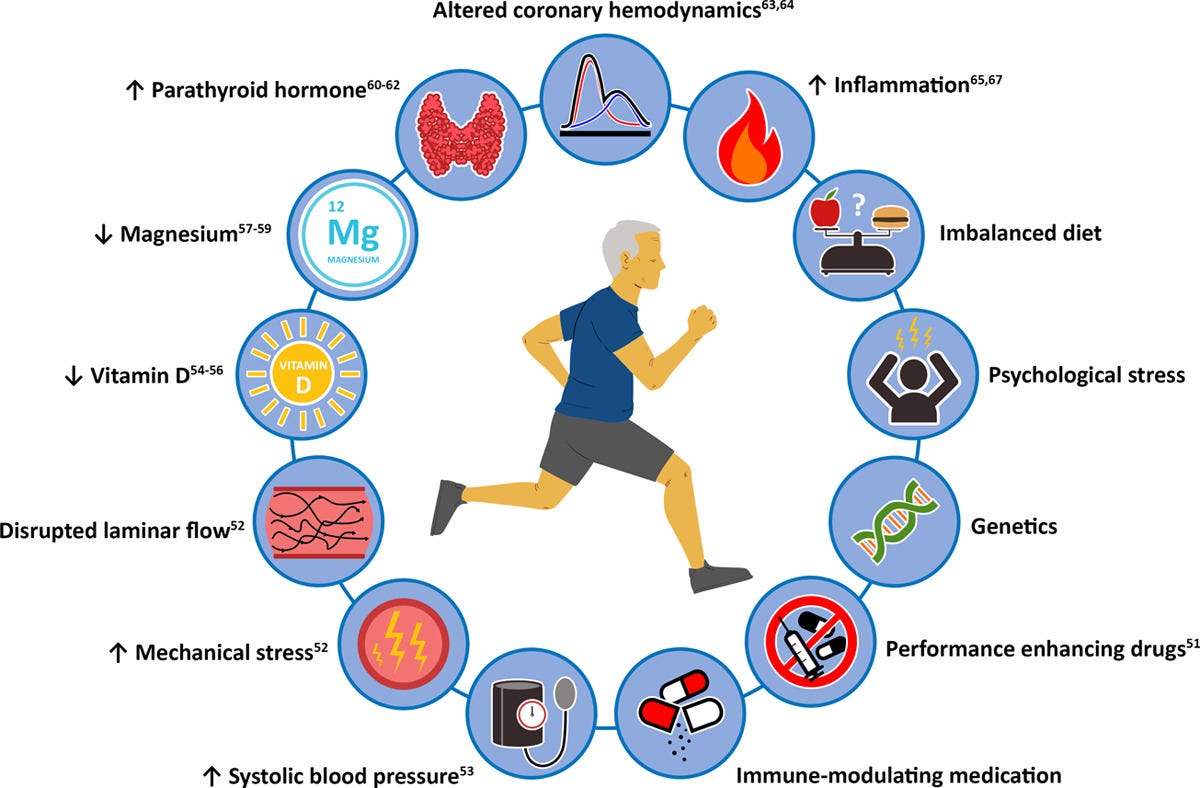
Why might very high levels of training be a problem? High-intensity exercise is stressful. Blood pressure and heart rate spike, blood flow becomes turbulent, and the heart and arteries go through high levels of mechanical stress and inflammation. Over years, the hypothesis goes, this might promote vascular remodeling, fibrosis, scarring, and atherosclerosis.¹ Let’s see what the data say.
More calcium, but the stable kind
One of the first and largest studies to show more atherosclerosis in athletes was the Measuring Athletes’ Risk of Cardiovascular Events (MARC) study.²
MARC looked at the lifelong exercise habits of 284 middle-aged amateur male athletes (average age 55), who were recreational or locally competitive. Here’s what it found:
The athletes with the most lifelong exercise (about 6 hours per week from age 12 onward) were more likely to have a CAC score above zero than the least-active group (about 1.5 hours per week). They also had more plaque of any type.
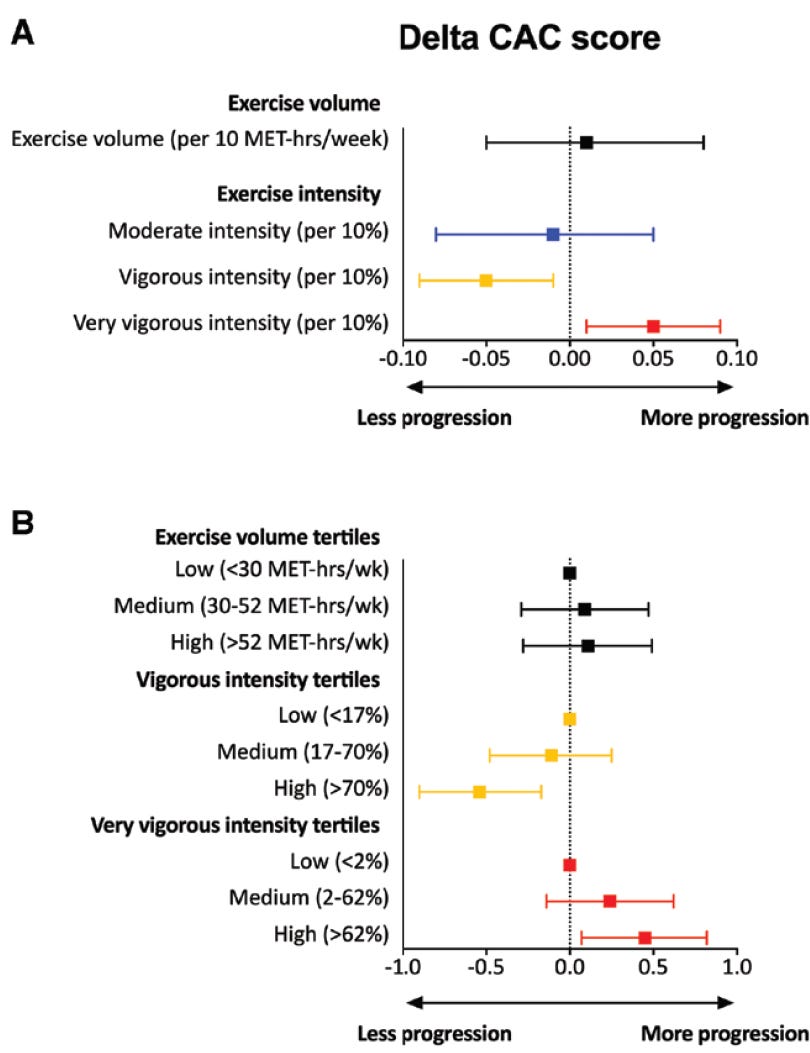
Moderate- and vigorous-intensity exercise weren’t linked to CAC or plaque. Very-vigorous-intensity exercise was. The more time spent at very-vigorous intensity each week, the more CAC and plaque.
But the type of plaque was different. The high-volume exercisers had fewer mixed plaques and more calcified plaques.
That became the comforting explanation. Calcified plaques are thought to be more stable and less likely to rupture than mixed plaques (calcified plus fatty components). So maybe athletes’ extra plaque is the less harmful kind.
Other studies from that period pointed the same way:
A 2017 study found more CAC and plaque in male masters endurance athletes than in sedentary controls, but mostly calcified plaque. Controls had more mixed plaque.
A 2020 study found total exercise volume was not related to CAC progression in middle-aged male and female endurance athletes.
A 2021 study of 25,000+ healthy adults found the most active people were more likely to have CAC and faster progression.
I’ve summed up the consensus this way: athletes, especially those doing high volumes and/or intensities of exercise, may be at higher risk for CAC and plaque, but the type of plaque they have might not put them at higher risk of cardiovascular events.
It was a neat, reassuring story. The next few years made it messier.

The “benign” plaque idea takes a hit
In 2023, the Master@Heart (Masters Athlete’s Heart) study set out to test the athlete plaque paradox directly.³
(I wrote about it in Physiology Friday #155.)
The study included three groups, with an average age of about 56:
191 lifelong athletes, who started endurance sport before age 30
191 late-onset athletes, who started after age 30
176 healthy non-athletes, who exercised less than 3 hours per week
The athletes trained about 11 and 10 hours per week, compared with about 1 hour in the non-athletes, and were much fitter—VO2 peak was 48 and 46 ml/kg/min in the lifelong and late-onset athletes versus 37 ml/kg/min in the non-athletes. Blood pressure, cholesterol, and family history of heart disease were similar across the groups.
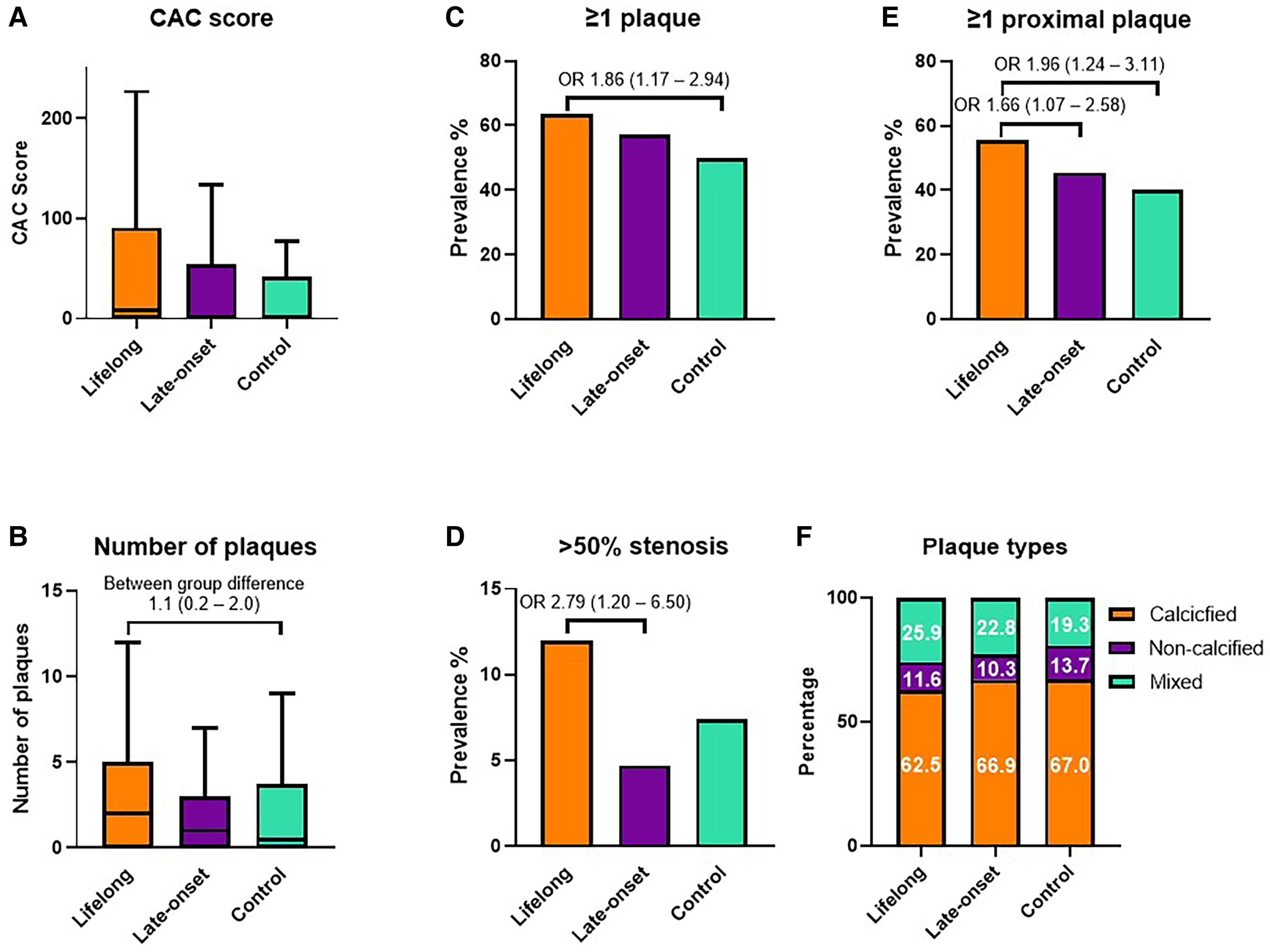
On average, CAC scores were low to non-existent in all three groups, and the number of plaques per person was similar.
But the lifelong athletes had higher stenosis severity and segment involvement scores (measures of overall plaque burden) than the non-athlete controls.
Compared with controls, lifelong exercise was linked to higher odds of having more than one coronary plaque, proximal plaque, calcified plaque, non-calcified plaque, and mixed plaque. The odds were roughly 58% to 180% higher, depending on the plaque type.
Lifelong athletes were also more likely than late-onset athletes to have a ≥50% narrowing (stenosis) in a coronary segment.
The one bit of good news was that lifelong athletes had fewer vulnerable plaques, meaning plaques with high-risk features that make them more likely to rupture. Vulnerable plaques were uncommon in every group, though.
This cracked the tidy story. Lifelong athletes were more likely to have calcified and non-calcified/mixed plaques, plus more significant stenosis and proximal plaque, all linked to higher heart disease risk! The overall mix of plaque types was similar across groups. Athletes didn’t have a uniquely “safe” kind of plaque… they just had more of it.
There was also a dose-response pattern in which lifelong athletes looked worse than late-onset athletes, who looked worse than the healthy non-athletes. That undercuts the “they took up running at 40 after years of bad habits” explanation, because the people who had trained the longest had the most plaque.
Two things matter here. The lifelong athletes still had a generally low risk profile overall. And this was an imaging study, not an outcomes study. It tells us what athletes’ arteries look like, not whether they’re having more heart attacks. The authors planned at least two years of follow-up for clinical outcomes, and I’ll come back to that gap at the end.
Does training make plaque progress?
The next question was whether continuing to train hard affects how atherosclerosis changes over time. MARC-2 brought back the original MARC cohort seven years later, at an average age of about 60.⁴
A few things stood out:
The men were actually exercising more at follow-up, yet CAC prevalence rose from 54% to 71%, plaque from 64% to 83%, and blood pressure from 129/80 to 139/82 mmHg. Some of that is aging, but cardiovascular health declined despite more activity.
Volume didn’t predict progression. CAC and plaque changed about the same in the men exercising around 8 hours per week as in those exercising around 3 hours per week.
Intensity was more complicated. A larger share of vigorous-intensity exercise was linked to slower CAC progression. A larger share of very-vigorous-intensity exercise was linked to faster CAC and plaque progression, mostly driven by more calcified plaque rather than non-calcified or mixed plaque.
My summary of MARC 1 and 2 is this: high levels of exercise seem to affect the presence of CAC and plaque, but volume doesn’t seem to drive progression, and a good share of relatively high-intensity work may even slow it. The very top end of intensity may have diminishing returns.
HIIT reduced plaque in people with heart disease
If very hard exercise is bad for coronary arteries, HIIT should be risky for people who already have coronary disease. A randomized trial I covered in Physiology Friday #199 found the opposite.⁵
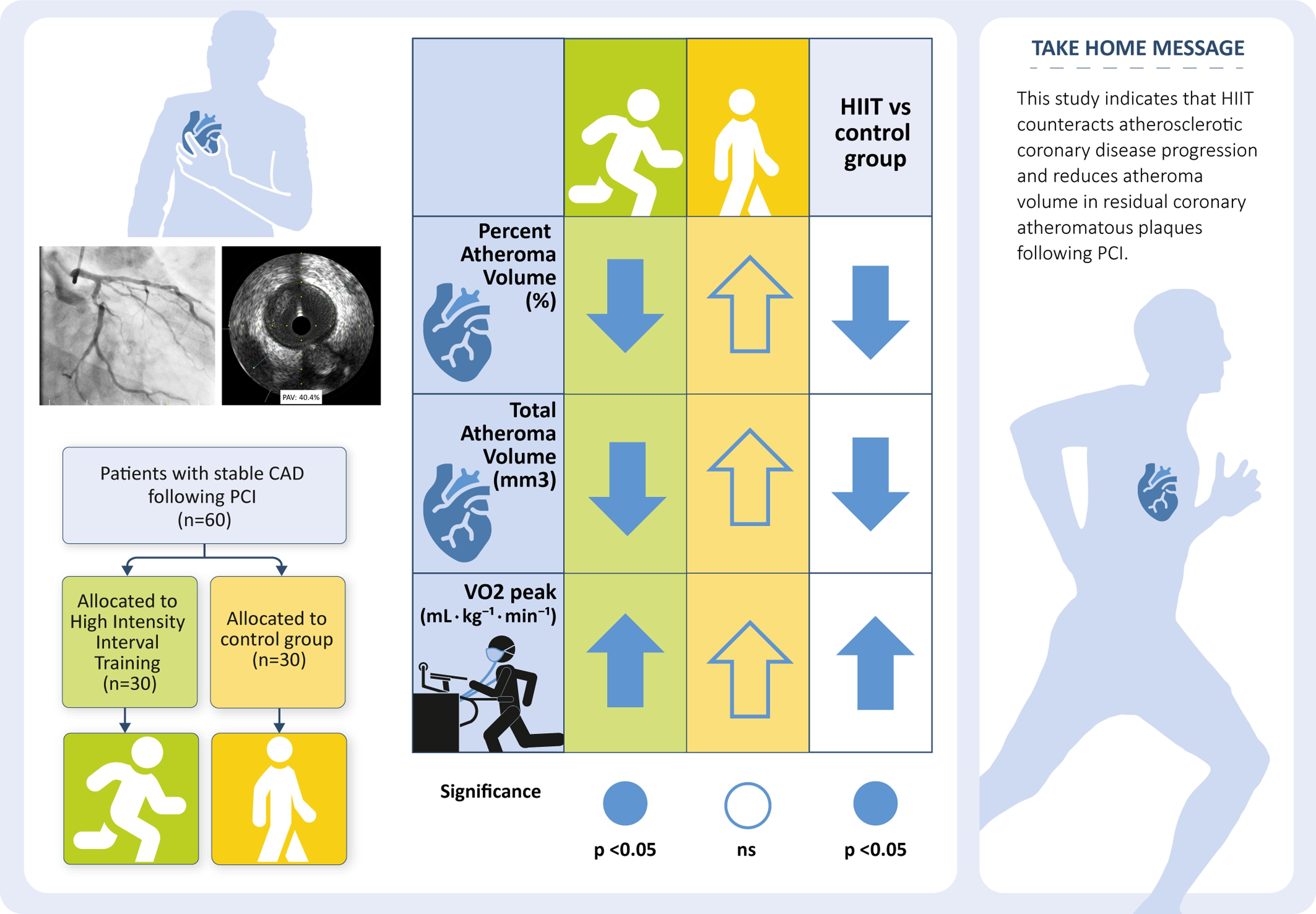
The CENIT trial randomized 59 adults (average age 58) with stable coronary disease, all recently stented and on lipid-lowering therapy, to HIIT or usual care for 6 months. HIIT meant two supervised sessions per week of 4 × 4-minute intervals at 85–95% of peak heart rate (the classic Norwegian 4 × 4 workout).
Plaque volume dropped 1.2% with HIIT, with no change in controls, and the arteries’ remodeling index improved.
VO2 peak rose by 3.3 ml/kg/min, and BMI and waist circumference fell.
LDL and ApoB didn’t change.
That 1.2% drop rivals what’s reported for statin therapy (0.9–1.22%). Since LDL and ApoB didn’t move, my best guess is that higher endothelial shear stress (a good thing), which HIIT increases even more than moderate exercise, played a role.
A reader asked how to square this with MARC-2’s very-vigorous finding. That’s a fair question, but the studies measured different things in different people—a 6-month randomized trial of supervised intervals in patients on lipid-lowering drugs (measuring plaque volume) versus self-reported, long-term training habits in healthy older athletes (measuring CAC progression). Together, they suggest some hard work is good for the arteries. Whether years at the very top end is a different story is still open to interpretation.
Traditional risk factors still matter
In late 2024, a new analysis of the MARC-2 cohort asked something we hadn’t really addressed: how much of athletes’ CAC is about training, and how much is about everything else?⁶ (I wrote about this in Lifestyle Risk Factors Predict Coronary Calcification among Male Endurance Athletes.)
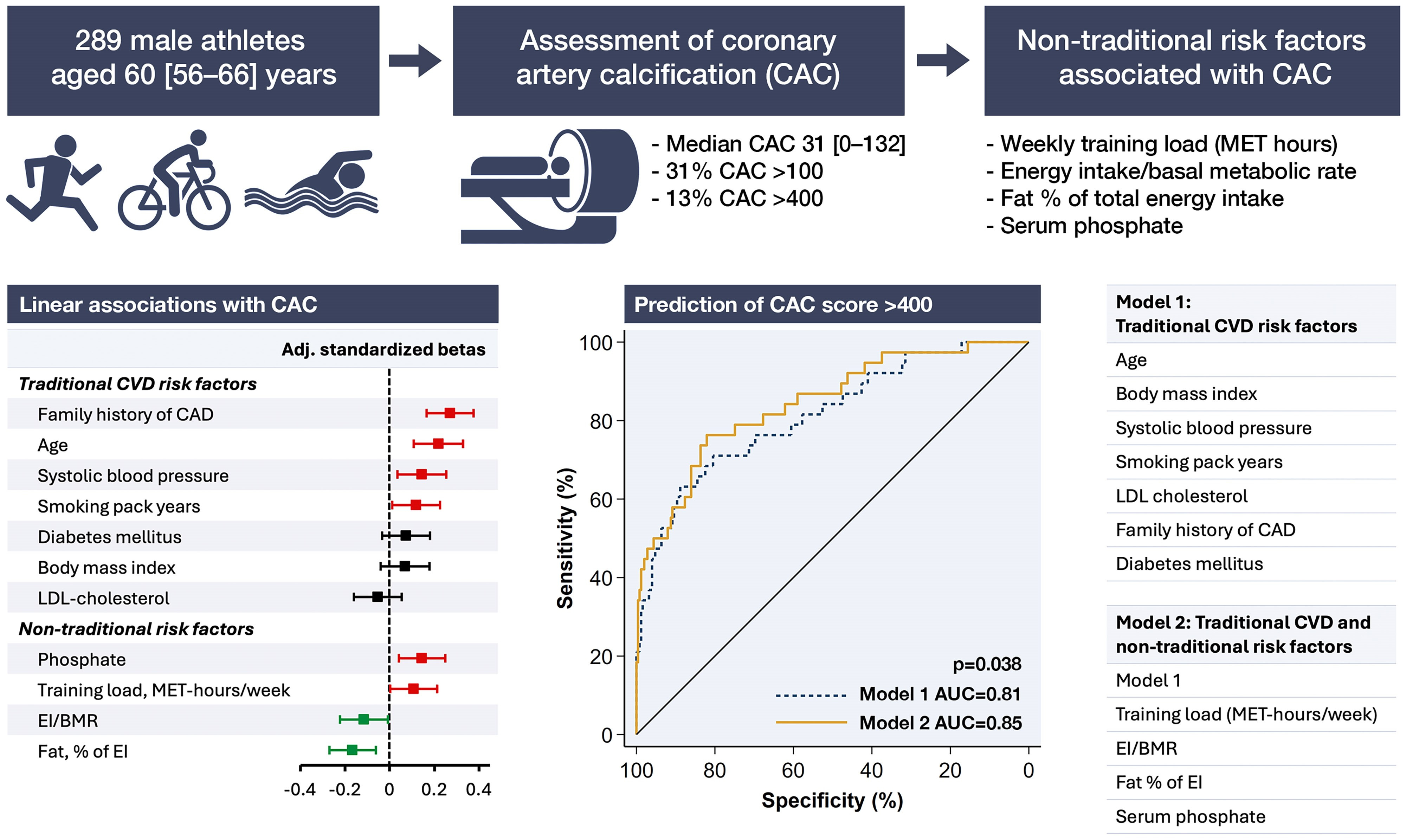
In 289 male athletes (average age 60), the usual suspects still applied:
Family history of coronary artery disease was the strongest predictor of severe CAC.
Age: each additional decade meant a 92% higher risk of CAC ≥100 and 215% higher risk of CAC ≥400.
Systolic blood pressure (14% higher risk of CAC ≥100 per 10 mmHg) and smoking history (38–53% higher risk per pack-years) mattered too.
Less traditional factors showed up as well:
Energy intake: each 1,000 kcal/day less meant a 40% higher risk of CAC ≥100 and 71% higher risk of CAC ≥400.
Dietary fat: a 10% higher share of energy from fat went with 34–60% lower risk.
Training load: each 10 MET-hours/week meant 11% higher risk of CAC ≥100, but only 3% for CAC ≥400.
So training load plays a role, but it’s one factor among many, and not the biggest. The diet results surprised me. My (speculative) guess is that athletes this age may have adopted the low-fat, high-refined-carbohydrate diets promoted decades ago. Or maybe adequate dietary fat just isn’t something to fear. And remember that blood pressure rose about 10 mmHg in this same cohort over seven years, suggesting athletes aren’t immune to the risk factors that affect everyone else.
Does post-race troponin tell us who has plaque?
Another theory is that very high amounts of endurance exercise cause repeated cardiac damage that eventually promotes disease. Troponin, the key marker of cardiac injury, rises after heart attacks but also after marathons. Those rises were once considered harmless, but people with abnormally high post-exercise troponin turn out to be at higher risk of cardiovascular events and death.
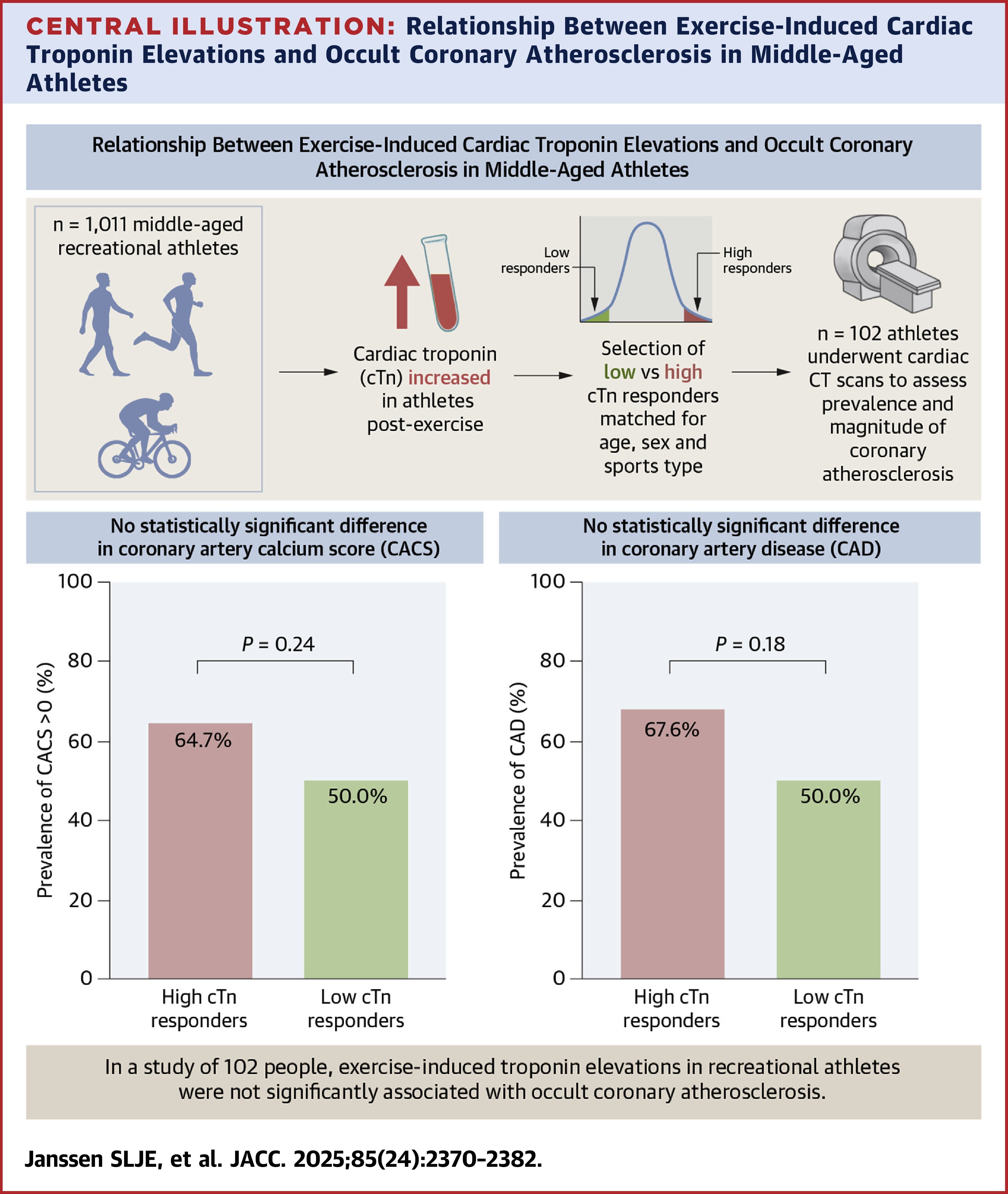
In Physiology Friday #278, I covered a study asking whether athletes with hidden coronary disease have bigger troponin responses.⁷ Researchers measured troponin before and after walking, cycling, and running events in 1,017 recreational athletes (average age 56), then CT-scanned the 68 highest and 34 lowest responders.
CAC scores, CAC prevalence (65% vs. 50%), and plaque types didn’t differ between high and low responders.
Resting troponin T correlated with CAC, but post-exercise troponin and the size of the rise did not.
Almost 52% had post-exercise troponin T above the upper reference limit (in the “looks like a heart attack” range).
Atherosclerosis showed up in 62%, in line with the ~60–70% reported in masters athletes.
So big troponin spikes and coronary atherosclerosis are both common in middle-aged recreational athletes, but they don’t seem to be linked. In the authors’ words, most of the variation in exercise-induced troponin rises “is not attributable to occult coronary artery disease [but rather] unknown factors.” A blood test after your next race won’t tell you whether you have plaque.
The athlete’s heart is not the same thing as heart disease
A lot of confusion comes from lumping together how the heart muscle remodels with training and atherosclerosis in the coronary arteries.
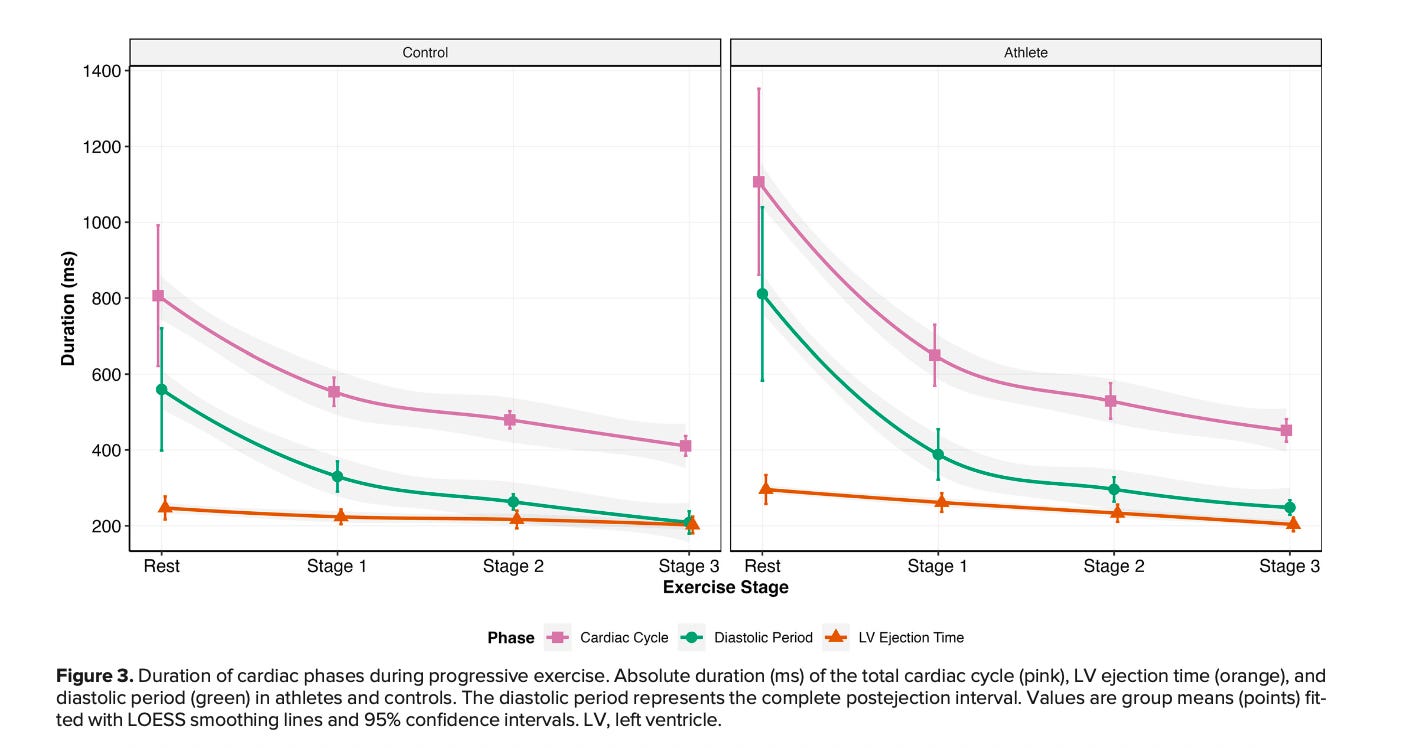
“Athlete’s heart” refers to the structural and functional changes that come with long-term endurance training. It isn’t a disease. It’s usually a normal physiological response to repeated high cardiac output demands (I covered this in detail in Physiology Friday #320).
These changes include mild-to-moderate enlargement of the ventricles and heart walls, better left ventricular filling, better heart mechanics (twisting and untwisting with each beat), and enlarged atria.⁸ The adaptations here give the heart a “timing advantage” that optimizes performance during exercise.9
This is very different from the harmful left ventricular hypertrophy of cardiovascular disease, where the wall thickens, and the chamber shrinks. In athletes, the chamber gets bigger (eccentric hypertrophy), so it can fill with and eject more blood.
None of that has anything to do with plaque. A big, efficient heart doesn’t protect your coronary arteries, and having CAC doesn’t mean your remodeled heart is sick. That said, there are two gray areas:
Fibrosis (collagen buildup that stiffens the heart) has been reported in veteran endurance athletes.¹⁰
AFib is the best-established “too much” finding. It’s more common in long-term endurance athletes, especially male masters athletes, likely because of bigger atria, autonomic changes, and years of repeated strain.11 It’s usually manageable and treatable. (This one is personal… I’ve had occasional short bouts of AFib after very intense workouts in hot, humid weather. Cardiologists couldn’t find anything, but it’s scary when it happens.)
The question that matters most is this: are athletes actually having more heart attacks or dying sooner? Everything we have says no:
The absolute risk of sudden cardiac death during exercise is extremely low: about 1 death per 1.42 million hours of vigorous exercise in one cohort of male physicians, and about 0.9–1.6 deaths per 100,000 marathon finishers. Most exercise-related deaths happen in people with underlying heart disease.
The fitter you are, the lower your risk of a cardiac event during exercise.
Runners had 30% lower all-cause mortality and 45% lower cardiovascular mortality than non-runners in one study of more than 55,000 people, and people who had been running longer did even better.¹² Finnish elite skiers lived 2.8–4.3 years longer than other men.
(For a deep dive into this and references, take a look at one of my earliest posts ever, No, Endurance Exercise Won’t Kill You.)
My best explanation hasn’t changed much. Plaque type might be part of it, but more likely, exercise protects athletes against the extra plaque they carry by improving endothelial function, blood pressure, coronary blood flow, and metabolic health.
But being active lessens the risk of a high CAC score. It doesn’t erase it. If two people have the same CAC score, the more active one is at lower risk, but both are at higher risk than someone with a low score.
Physiologically speaking…
Taken together, here’s where I land.
Lifelong endurance athletes, at least middle-aged and older men, really do have more coronary plaque than their healthy peers, and “it’s just the stable kind” is too simple an explanation. Training load plays some role, very-vigorous intensity maybe more, but family history, blood pressure, smoking, age, and perhaps diet matter as much or more.
At the same time, athletes keep living longer and having less cardiovascular disease. The athlete’s heart is an adaptation, not a disease, and the rare bad outcomes seem to depend more on underlying vulnerability than on weekly training volume.
So, physiologically speaking, this means:
The evidence still strongly favors a long, healthy life for people who like to push the limits now and then.
Fitness lowers the risk that comes with plaque. It doesn’t make plaque go away.
Treat blood pressure, lipids, and a high CAC score as seriously as anyone else would (exercise doesn’t protect you from adverse risk factors).
I think it’s best to be aware and cautious, but not alarmist. Even the highest levels of fitness don’t make you immune to disease, and that’s humbling. But in the words of Amby Burfoot, if endurance exercise really were deadly: “Show me the bodies in the street.”
I’ll keep following this research as long as I keep running, which I hope will be a very long time.
Thanks for reading. See you next Friday.
~Brady~
Ketone-IQ is high-performance energy in a bottle. I use it for post-exercise recovery along with enhancing focus, mood, and cognition. Take 30% off your order.

ProBio Nutrition—the all-in-one supplement that I use every single day—is offering 20% off with the code HOLMER20 at checkout. My preference is the tangy orange flavor, but they also sell an unflavored “smoothie booster” that’s great in a shake, smoothie, or juice.

Equip Foods makes some of the cleanest, best-tasting protein products around. I am absolutely obsessed with their Prime grass-fed protein bars (the peanut butter ones are to die for, but they also just released a new chocolate peanut butter flavor).

Wild Roman is an all-natural skincare brand for men who want a simple, effective routine designed to strengthen skin with modern formulas and wild-sourced ingredients. The company was started by my friend Sahil Bloom, and it’s the only skincare brand I’ve enjoyed using. Their biggest seller is the complete face routine, and I’m partial to the bar soap (seriously… it’s incredible stuff).
Shop through my link to get the $99 Face Routine, free Bar Soap, and free shipping, plus 15% off regularly priced items.

References
Franklin BA, Thompson PD, Al-Zaiti SS, et al. Exercise-related acute cardiovascular events and potential deleterious adaptations following long-term exercise training: placing the risks into perspective–an update. A scientific statement from the American Heart Association. Circulation. 2020. doi:10.1161/CIRCULATIONAHA.119.044467
Aengevaeren VL, Mosterd A, Braber TL, et al. Relationship between lifelong exercise volume and coronary atherosclerosis in athletes. Circulation. 2017;136(2):138–148. doi:10.1161/CIRCULATIONAHA.117.027834
De Bosscher R, Dausin C, Claus P, et al. Lifelong endurance exercise and its relation with coronary atherosclerosis. European Heart Journal. 2023;44:2388–2399. doi:10.1093/eurheartj/ehad152
Aengevaeren VL, Mosterd A, Bakker EA, et al. Exercise volume versus intensity and the progression of coronary atherosclerosis in middle-aged and older athletes: findings from the MARC-2 study. Circulation. 2023;147(13):993–1003. doi:10.1161/CIRCULATIONAHA.122.061173
Vesterbekkmo EK, Aksetøy ILA, Follestad T, et al. High-intensity interval training induces beneficial effects on coronary atheromatous plaques: a randomized trial. European Journal of Preventive Cardiology. 2023;30(5):384–392.
Berge K, Janssen SLJE, Velthuis BK, Myhre PL, Mosterd A, Omland T, Eijsvogels TMH, Aengevaeren VL. Predictors of coronary atherosclerosis in middle-aged and older athletes: the MARC-2 study. Eur Heart J Cardiovasc Imaging. 2025;26(3):461–470. doi:10.1093/ehjci/jeae317
Janssen SLJE, van Everdingen WM, Saalmink WBJ, et al.; TREAT study collaboration. Relationship between exercise-induced cardiac troponin elevations and occult coronary atherosclerosis in middle-aged athletes. J Am Coll Cardiol. 2025;85(24):2370–2382. doi:10.1016/j.jacc.2025.04.047
Eijsvogels TMH, et al. Are there deleterious cardiac effects of acute and chronic endurance exercise? Physiol Rev. 2016;96:99–125.
Spencer LW, Flannery MD, Janssens K, et al. A race against time: timing constraints of cardiac filling and athletic performance. Am J Physiol Heart Circ Physiol. 2026;330(5):H1423–H1432. doi:10.1152/ajpheart.00896.2025
Lindsay MM, Dunn FG. Biochemical evidence of myocardial fibrosis in veteran endurance athletes. British Journal of Sports Medicine. 2007;41(7):447–452.
Javed W, Brown B, Chambers B, et al. The timing and relationship of ventricular arrhythmia with exercise patterns in veteran male endurance athletes. European Journal of Preventive Cardiology. 2026; zwag021. doi:10.1093/eurjpc/zwag021
Lee D, Pate RR, Lavie CJ, Sui X, Church TS, Blair SN. Leisure-time running reduces all-cause and cardiovascular mortality risk. JACC. 2014;64(5):472–481.
Your closing takeaway — treat blood pressure, lipids, and a high CAC score "as seriously as anyone else would" — hits hardest at the pharmacy counter, and there's one clinical wrinkle worth adding for your athletic readers. Statins are known to increase coronary calcium over time while cutting events: the drug calcifies plaques as it stabilizes them. That means a masters athlete who starts a statin, gets a repeat CAC two years later, and watches the score climb shouldn't read it as the drug failing — or as the running backfiring.
Which raises the counseling problem I'd put to you: when should this be said out loud?
A calcium score still drives the guideline decision — a nonzero CAC in an intermediate-risk patient generally tips the scales toward lipid therapy, fitness or not. But if athletes only learn the statin-calcification caveat after the scary follow-up scan, it lands as damage control. Should it be part of the pre-scan conversation for high-mileage patients instead?
Disappointing -- yet more studies, information, and analyses that lack females. We, too, would like to know, as female middle-aged endurance athletes, how our hearts are doing.